
Martha Peterson, CCSE
Join Martha Peterson’s 18-week training to release chronic tension, restore mobility, and rediscover the freedom to move with ease at any age.
During the six progressive phases of Clinical Somatic Education, you’ll move from awareness to release to self-regulation to integration to functional freedom — ultimately becoming your own somatic teacher.
What if much of the stiffness and pain we associate with aging isn’t inevitable?
What if some of it stems from habitual muscular tension your brain has learned in response to stress, injury, and the demands of daily life?
Over time, your brain can lose its ability to fully sense and voluntarily relax certain muscles. Thomas Hanna, the founder of the field of somatics, called this sensory-motor amnesia.
The good news? You can learn to restore that awareness and help your body rediscover greater ease and freedom of movement.
Whether you’re new to somatic movement or have studied with her before, beloved somatic educator Martha Peterson invites you to explore what’s possible when you learn to work with your body from within.
Her 18-week training will guide you to release the stress reflexes behind chronic tension and restore ease to everyday movements like walking, reaching, turning, and getting up and down from the floor.
Rooted in Hanna’s work, Martha’s approach blends developmental movement, neuroscience, and deep insight into how we hold and release tension. She treats mind, body, and emotions as an integrated whole known as the soma.
Over six progressive phases, you’ll build a rich vocabulary of somatic skills while continually deepening your ability to sense, release, coordinate, and regulate your body from within.
Rather than rushing from one technique to the next, each lesson expands on what you’ve already learned, helping you develop greater nuance, control, and confidence until the principles become tools you can apply to whatever your body needs.
Pandiculation — the gentle contraction and slow release of muscles—is at the heart of this work. You’ll also learn how to recognize the Red Light, Green Light, and Trauma Reflexes in your own body. Then, you’ll apply these skills to the movements that matter most as you age. Every movement can be practiced seated, standing, or lying down.
You’ll gain a lifelong somatic toolkit, along with the awareness and self-trust to sense, monitor, and correct your own patterns. By the end, you’ll feel empowered to move through life with greater comfort, control, and freedom.
Who This Training Program Is For
This training is for you if you’re ready to stop accepting stiffness and pain as “just part of getting older” — and if you want to rediscover the comfort, ease, and confidence of a body you can sense and change from within. You’ll move slowly and deliberately, building a foundation that lets you care for your own body for the rest of your life.
If you’ve studied with Martha before, this is your opportunity to go deeper. Knowing the name of a movement is very different from knowing it in your body. With more time to explore each reflex, each principle, and each movement, you’ll strengthen your “ABCs.” You’ll understand why this work helps and how to apply it to whatever comes up in your life.
This training is especially valuable if you are:
- Living with chronic back, neck, shoulder, or hip pain
- Feeling stiffer, tighter, or less steady with age
- Told “nothing is wrong,” but you're still living with pain
- Recovering from an old injury, accident, or years of compensation
- Someone who has tried everything, including other somatic approaches
- A returning student ready to truly embody the fundamentals more deeply and understand why they work
- A movement, wellness, or helping professional who wants to deepen your personal understanding of somatic principles
- Interested in how stress, emotion, and habitual tension affect how you feel and move
- Looking for gentle options you can practice seated, standing, or lying down
- And more…

What You’ll Explore in This 18-Week Training
You’ll learn how to:
- Recognize How Stress and Emotion Become Muscular Tension
Learn how thoughts, emotions, and life’s demands trigger an instant muscular response, and how repeated stress can lead to sensory-motor amnesia. - Master Pandiculation, the Key to Releasing Habitual Tension
Understand how pandiculation differs from stretching, PNF, contract-release, and relaxation exercises, and why it restores sensation and voluntary control. - Unwind the "Go, Go, Go" Pattern Behind Chronic Back Pain
Release the Green Light Reflex that keeps your back muscles contracted, using your own hands to feel what your muscles are really doing. - Restore Balance to Both Sides of Your Body
Recognize compensation patterns from injury, accidents, or one-sided habits. These patterns can contribute to sciatica, SI joint dysfunction, and scoliosis. You’ll learn how to bring your pelvis back into balance. - Get Up and Down Off the Floor With Ease
Return to the developmental movements you used as a baby to move safely between the floor and standing, a key skill for lifelong mobility and independence. - Become Your Own Somatic Teacher
Develop the skills to self-sense, self-monitor, and self-correct, and create a simple, adaptable daily practice that evolves with your needs.
Awareness, Self-Assessment & Lifelong Practice Tools
- The 6-Point Practice — orients you to the relationships between your head, shoulders, and pelvis along the front, back, and diagonals of your body
- Soma Scans — detailed seated, standing, and walking scans to reveal areas of tension, ease, and habitual patterns
- Body Pulsing Exercise — assesses the level of unconscious tension you’re holding, from your feet to your head
- Self-Palpation — uses your own hands to confirm what your muscles are doing versus what you think they’re doing
- Bridge & Boat — explores balance and asymmetry through diagonal, whole-body movement
- Pulling Rope — addresses one-sided patterns of tension and imbalance
- Structural vs. Functional Self-Assessment — a guided worksheet to help you understand what’s happening in your own body
- Comprehensive Flow Practice — cultivates fluidity from one movement to the next so you know how to put your practice all together
- Personal Daily Practice Design — a simple, adaptable routine that changes with what you sense and need
Pandiculation Skills
- Pandiculation — a conscious contraction followed by a slow, controlled release that restores sensation and voluntary muscular control
- Freestyle Pandiculation — lets you create your own pandiculations whenever you sense tension building
- Effort Modulation — "turns up" and "turns down" a contraction for greater sensitivity and control
- Differentiation — uses gentle, non-habitual movements to interrupt deeply learned sensory-motor patterns
Stress Reflex Release, Whole-Body Integration & Functional Movements
- Arch & Flatten — the developmental foundation for coordinating the front and back of your body
- The Flower — releases the Red Light Reflex, explored standing, on your side, and in its full expression
- Back Lift — recreates what babies do naturally to release the Green Light Reflex
- Arch & Curl — helps you sense how the muscles along your back contract and release
- Side Bend — helps you feel your sides more clearly and release patterns of compensation
- Hip Hikers — free up the side-to-side movement of your pelvis
- Pelvic Recalibration — helps you check whether your pelvis is truly in balance
- The Washrag — creates greater freedom and ease of rotation through your spine
- Steeple Twist With Arm Rotation — connects your shoulder girdle and hip girdle in whole-body rotation
- Rib Cage Pandiculation — frees the muscles between your ribs for fuller, easier breathing
- Hip & Shoulder Circles — restore supple, coordinated movement between your shoulders and hips
- Walking Movements — coordinate your back, front, sides, pelvis, legs, and feet for more balanced walking
- Inversion & Eversion — improve mobility in your feet, ankles, knees, and hip sockets, seated or standing
- The Propeller — explores coordinated movement between your shoulder girdle, pelvis, and center
- Pectoral Clock — differentiates movement through your chest and shoulders
- Seated Twist — separates the movements of your eyes, head, neck, torso, and hips for easier turning
- Developmental Floor Movements — gentle crawling, squatting, and weight-shifting to move between the floor and standing
Create Your Own Learning Experience
Join the Livestream – or Enjoy Flexible Access to the Recorded Sessions Anytime, Anywhere!
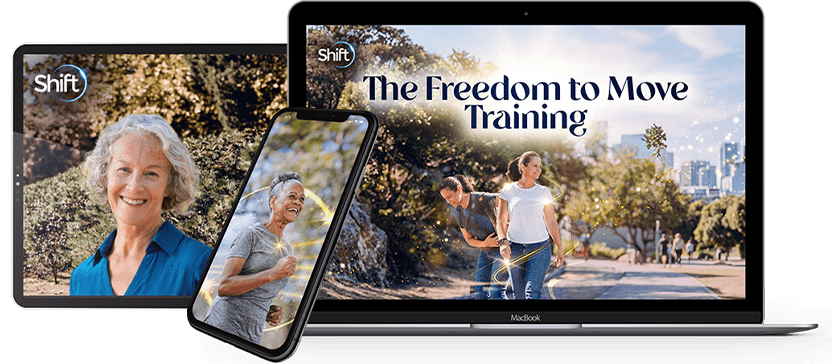
Connect with Martha and experience her teachings through livestreaming video via any connected device.
Not able to attend the live sessions? No problem! With our flexible access options and Martha’s extensive handouts and in-class demos as support, you have the freedom to create your own classroom experience on your own terms.
Whether you want to dive deep into regularly scheduled weekly training sessions or savor the journey over an extended time period, you can choose how to best benefit from this one-of-a-kind training program:
- Tailor Your Experience: Watch the sessions at your own pace, whenever it suits you. You can mix and match, replay your favorite parts, or spread out the content over several days (or even months).
- Ultimate Flexibility: Whether you’re an early bird or a night owl, the recorded sessions are available to you 24/7 so you can create a learning experience that fits your schedule.
Here’s What You’ll Receive

90-Minute Class Sessions With Martha Peterson
Experience a unique opportunity to be mentored by and learn from Martha Peterson, the author of Move Without Pain. Each class session includes a livestreaming video option, a teaching segment of 60 minutes, a Q&A for 30 minutes, and an optional breakout session for 30 minutes. Program sessions are on 2027-01-05 9:00:00 am.

Video and Audio Recordings of Class Sessions
Video and audio recordings will be available for you to stream in a high-quality digital format after each live class session. You’ll never have to worry about missing a class, and you can access the sessions anytime and anywhere at your convenience.

Transcripts of Class Sessions
You’ll also receive the entire class transcript after each session is completed. You can then review, print, and highlight the insights and practices you found most impactful.

30-Minute Interactive Group Breakout Sessions
Following each 90-minute live class, there will be a 30-minute optional interactive breakout session. You’ll be placed in a small, intimate Zoom group with a few other participants to interact, reflect, and share around a weekly topic, helping you more fully integrate the lessons. Breakout sessions are not recorded. Whether or not you attend the live sessions, the online community group provides a space for you to connect with each other and arrange alternative times to interact.
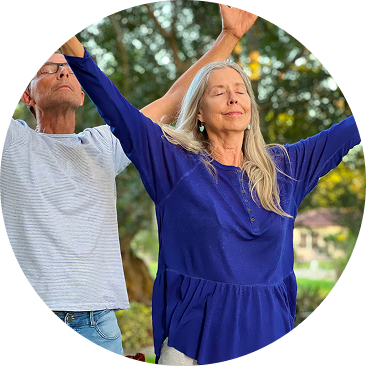
Energetic Practices and Reflection Questions
Between class sessions, you’ll have the opportunity to complete energetic protocols, practice new tools, and reflect upon your experience to accelerate learning and integrate each week’s lesson.

Online Community
Our exclusive online community is the perfect place to continue your discovery process after each class. Here, you can continue the discussion about your program materials and interact with your fellow students to take your exploration to an even deeper level.
About Martha Peterson, CCSE
EDIT
Martha Peterson, CCSE, is a certified clinical somatic educator and leader in the field of somatic education. She’s the founder and CEO of Essential Somatics® and the author of Move Without Pain. Martha heads a growing faculty of clinical somatic educators who present Essential Somatics teacher trainings, retreats, workshops, and seminars around the world. She also maintains a private clinical practice.
Martha’s expertise comes from more than 30 years of working in the fields of dance, bodywork, and somatic education. As a former professional dancer who suffered chronic hip and knee pain due to injuries, Martha understands the frustration and struggle many people experience when trying to discern between the myriad methods that claim to relieve or “fix” chronic pain. She eventually discovered clinical somatic education, the only method that taught her how to reverse her pain and postural imbalances, regain physical control, and create a life of movement, choice, and joy.
Martha is an experienced hiker, inspired by her mother with whom she climbed Mt. Kilimanjaro and trekked in Sikkim, Northern India. She has learned that the key to remaining healthy and mobile is daily, vigorous, fun movement, a regular somatic movement routine, a sense of humor, and learning the fine art of relaxation and self-regulation.
Program Details & Curriculum
Course Sessions are on 2027-01-05 9:00:00 am.
This program will feature LIVE teachings, guided movement practices, discussion, and Q&A with Martha.
Each of the six phases focuses on a key stage of your somatic journey. You’ll move from reclaiming awareness and releasing stress reflexes to restoring ease, reconnecting your whole body, moving through daily life with confidence, and becoming your own somatic teacher.
The program begins with a foundational phase that orients you to the history and principles of somatic education and the difference between a body and a soma. It also covers how stress shapes the way you feel and move, and introduces pandiculation, the technique at the heart of this work. This phase will ground you in the key concepts and prepare you for the movements and practices that follow.
To support a deep and embodied learning experience, each phase will be delivered across three sequential modules:
1: Understanding the Pattern
Gain a clear understanding of the habitual muscular patterns explored in each phase, including how stress, emotion, and injury create them and how they show up in your posture, breathing, and movement.
2: Somatic Movement Exploration
Learn and refine gentle somatic movements, guided by the principles of pandiculation, that release these patterns at their source and restore sensation and voluntary control.
3: Practice and Integration
Apply what you’ve learned through guided practice, discussion, and Q&A, bringing greater ease and confidence into the movements of your daily life.
This progressive format lets you build your skills step by step, with time to truly embody each one. As a result, you’ll be able to move through life with greater comfort, control, and freedom.
To complete your training, the final phase is designed to help you become self-reliant, so you can care for your body long after the course ends. You’ll learn to recognize your unique asymmetries, tell functional challenges from structural ones, and adapt your practice to whatever arises in your daily life.
Phase 1: Reclaiming Awareness & Control: Discover Your Body’s Capacity to Change
(Modules 1–3)
Stiffness and discomfort aren’t simply something happening to your body. They’re often the result of habitual muscular patterns that you can learn to sense and change. Martha will introduce you to somatic awareness, sensory-motor amnesia, the effects of stress on the body, and pandiculation, the technique you’ll build on throughout the program.
Get Oriented in Your Body So You Can Begin to Notice the Habitual Patterns That May Be Limiting You (2027-01-05 9:00:00 am)
As your journey begins, you'll explore how your beliefs about aging, your body, and your movement potential can shape how you feel and move — and why this matters.
You'll discover why stiffness and discomfort aren't simply inevitable consequences of getting older, and explore the history of somatic education as a process of self-discovery and self-learning that can create long-lasting and positive change.
In this module, you'll explore:
- Your personal beliefs and expectations about aging and your body
- Why stiffness, discomfort, and reduced mobility may not be inevitable parts of getting older
- How loss of voluntary muscular control can contribute to habitual patterns of tension and movement
- Guided sensing to explore what you can feel and where you can move
- A more hopeful and empowered understanding of your ability to influence how your body feels and moves, including an experience of how the front and back of your body are connected along the diagonals—a way to truly ground and connect yourself in your body
- The 6-Point Practice, a seated exercise to orient yourself in your body, sensing the relationship between your shoulders and pelvis, noticing what it's like to sit in a chair and put your feet on the floor — and playing with what it feels like to make yourself tall or short
Experience Yourself as a Soma to Sense Tension and Ease From Within (2027-01-12 9:00:00 am)
Explore the difference between the somatic perspective and the traditional biomedical view of the body—where a body is what we see when we look at other people through a biomedical lens that's often looking for what's wrong, while a soma is your experience of your body from within, encompassing your emotional and psychological state through a bio-psycho-social model of wellness where there's really no such thing as mind and body, only the soma.
You'll explore how you learned to move as a baby and why this innate process of self-learning can support you in your daily somatic movement practice, and begin noticing how changing one thing can change everything.
In this module, you'll explore:
- The essential difference between viewing yourself as a body and experiencing yourself as a soma
- How the somatic perspective differs from the traditional biomedical model of health
- How the natural process through which you learned to move as a baby can support new learning throughout life
- Gentle soma scans—while walking, sitting, and standing—to recognize areas of tension, relaxation, and habitual muscular patterns
- Greater awareness of yourself from within and a clearer sense of how you feel and move in the present moment
Understand How Stress Shapes Your Body So You Can Release Unconscious Tension Before It Becomes Pain (2027-01-26 9:00:00 am)
Discover that stress — including global stress — is first a physiological experience, immediately affecting muscular tension, breathing, posture, and movement.
You'll explore why we often recognize the effects of these stress responses later, when pain or restricted movement develops. You'll learn how repetitive stress can develop into sensory-motor amnesia and how pandiculation is the key to releasing habituated, unconscious muscular tension.
You'll also explore how your behaviors can reinforce stress or help you return to greater calm and relaxation.
In this module, you'll explore:
- Stress as a physiological experience, and how your body responds reflexively to it
- Why the connection between stress and physical symptoms often becomes apparent only after habitual patterns of tension develop
- How repeated stress responses can lead to sensory-motor amnesia and change what your sense of "normal" is in your body
- Pandiculation, to reduce habituated, unconscious muscular tension and develop greater sensory awareness and voluntary motor control
- How your habitual responses and behaviors can reinforce stress or help move you toward greater calm, physical comfort, and freedom of movement
- The Body Pulsing Exercise, to assess the levels of unconscious tension in your body, along with guided breathing exercises to begin noticing your breath
Phase 2: Releasing Your Body’s Stress Patterns: Recognize & Unwind the Reflexes Behind Chronic Tension
(Modules 4–6)
This phase is built around the three primary stress reflexes: Red Light, Green Light, and Trauma. You’ll see how protection, constant activation, injury, and compensation become embedded in the body as habitual muscular patterns. You’ll also learn to recognize these patterns in yourself.
Recognize Your Startle Response So You Can Release the Tension It Creates in Your Chest and Shoulders (2027-02-02 9:00:00 am)
In this module, you'll discover how reflexes are automatic and essential for survival and yet help you respond to life automatically. You'll explore the startle response, or "Red Light Reflex," a primal response to perceived danger, and how it contracts muscles along the front of your body. You'll learn how this reflex can become habitual, contributing to neck and shoulder pain, jaw tension, shallow breathing, and other stress-related symptoms—and begin recognizing its patterns in yourself.
In this module, you'll explore:
- The Red Light Reflex and its fundamental role in protection, survival, and safety
- Which muscles along the front of your body contract as part of this protective response
- How a habituated Red Light Reflex can contribute to pain, tension, fatigue, and other stress-related symptoms
- Greater awareness of how this primal protective pattern may be showing up in your own body and daily life
- Gentle somatic movements that release tension within the muscles of the Red Light Reflex for deeper breathing, taller posture, and clearer thinking
- The Flower Movement, playing with coming inward and opening outward—first along the side of your body, then in its full expression
Work With the Green Light Reflex So You Can Relieve Chronic Tension in Your Back (2027-02-09 9:00:00 am)
Explore the Green Light Reflex, or Landau response, which helps you rise against gravity, mobilize for action, and move forward in life.
You'll discover how the drive to "go, go, go" and meet life's demands can keep the muscles of your back habitually activated, contributing to back tension and pain — often the root cause of chronic back pain, which makes this module critically important for anyone dealing with back pain.
In this module, you'll explore:
- The Green Light Reflex and its essential role in helping you rise against gravity, take action, and move forward
- How thoughts such as "I have to get this done" can trigger muscular activation and reinforce a go-go-go pattern
- How chronically activated back muscles can contribute to persistent back tension, discomfort, and pain
- The Back Lift and Arch & Curl, recreating what babies do naturally, to sense how the muscles along the back of your body contract and release—and to relearn the ability to relax one part of your body while contracting another
- Pandiculation, to reduce habitual back tension and develop greater comfort, stability, and voluntary control
Explore the Trauma Reflex to Restore Balance to Both Sides of Your Body (2027-02-16 9:00:00 am)
Explore the Trauma Reflex, a pattern of muscular compensation that can develop after injury, accidents, or repetitive one-sided activities.
You'll discover how habitual twisting and rotation can show up in how you stand, sit, walk, tilt, and even use your eyes, contributing to sciatica, scoliosis, and one-sided pain. By exploring your own history, checking whether your pelvis is truly in balance, and practicing the Side Bend and other somatic movements, you'll begin sensing your sides more clearly and releasing patterns of imbalance.
In this module, you'll explore:
- The Trauma Reflex and the muscles involved in creating patterns of compensation, imbalance, and asymmetry
- How injuries, accidents, functional habits, and one-sided activities can change what your brain's sense of "upright" feels like
- How habitual twisting, rotation, and tilting may be showing up in your posture, gait, and even the way you use your eyes
- How a habituated Trauma Reflex can contribute to sciatica, sacroiliac joint dysfunction, leg-length discrepancies, scoliosis, and other forms of one-sided joint pain
- The Side Bend, hip hikers, and other somatic movements to sense your sides more clearly and free up the movement of your pelvis to restore balance on both sides of your body
Phase 3: Restoring Ease & Self-Regulation: Learn to Release Tension and Move With Less Effort
(Modules 7–9)
You’ll move from recognizing your patterns to changing them — deepening your practice of pandiculation and learning to regulate muscular effort instead of simply working harder. Then you’ll begin bringing these skills into one of the most important everyday movements: walking.
Release Deeply Held Bracing So You Can Move With Greater Ease (2027-02-23 9:00:00 am)
You'll explore bracing, or the "Dark Vise," a holding pattern that can leave you feeling caught in multiple stress reflexes at once.
Take a deeper dive into the neuroscience of pandiculation and learn how to work with layers of deeply held tension. Through "freestyle pandiculation" and targeted movements, you'll discover how to assess where to begin when your body feels overwhelmingly tight and develop practical strategies you can use anytime, anywhere.
In this module, you'll explore:
- How bracing can leave you feeling caught in multiple patterns of tension at the same time
- The neuroscience of pandiculation and how it helps restore voluntary muscular control
- "Freestyle pandiculation," to identify areas of tension and contract into and out of them whenever you sense tension building
- Arch & Flatten, the Flower, and integrative movements, to begin peeling away layers of tension and prepare your body for a more comprehensive somatic movement practice
Modulate Your Muscular Effort to Develop Greater Control & Sensitivity (2027-03-02 9:00:00 am)
You'll deepen your practice of pandiculation by learning to modulate the amount of muscular effort you use.
You'll explore how to "turn up the volume" of a contraction and slowly turn it down, developing greater control and sensitivity within a comfortable range.
In this module, you'll explore:
- How varying the intensity of a contraction can change what you sense within your pandiculations and be more effective than working hard
- How to "turn up" and slowly "turn down" muscular effort for greater awareness, comfort, and motor control
- The Back Lift and the Diagonal Arch and Curl, for a nuanced way to release habitual tension through the front and back of your body
- The Washrag, as an integrative movement to experience greater freedom and ease of rotation through your spine
Coordinate Your Whole Body to Walk With Greater Stability & Ease (2027-03-09 9:00:00 am)
Bring together what you've learned to explore walking as a whole-body movement.
You'll discover why a freely moving pelvis — your center of gravity — can create greater stability, balance, and ease rather than less, and start to notice how much effort you really need when you walk.
By reviewing familiar movements and exploring new Walking Movements, you'll learn to release unnecessary tension through your center and better coordinate your pelvis, legs, and feet for more comfortable, efficient movement.
In this module, you'll explore:
- The somatic movements and skills you've learned so far, integrated into a more personalized, responsive practice
- Why walking is a fundamental human movement and how your whole body subtly participates in every step
- How greater freedom through your pelvis and center can improve stability, balance, and ease of movement
- How to use the muscles you need for movement without unnecessarily recruiting muscles you don't need
- The Walking Movements, to coordinate your back, front, sides, pelvis, legs, and feet for more balanced and comfortable walking
Phase 4: Reconnecting Your Whole Body: Restore Coordination, Stability & Freedom From the Center Out
(Modules 10–12)
This phase expands the work to the whole body, connecting breath, spine, shoulders, hips, legs, and feet. You’ll experience how changing one part of the soma can influence your entire movement system.
Free the Muscles Between Your Ribs to Breathe More Fully and Deeply (2027-03-16 9:00:00 am)
Review sensory-motor amnesia, the stress reflexes, and bracing as you begin exploring your body as an integrated system. You'll discover how your spine and center connect and support movement throughout your body, and how tension there can affect breathing, posture, and balance.
By sensing and pandiculating the muscles between your ribs — often an enormous "aha" moment—you'll begin freeing the mechanisms of breathing while experiencing greater integration, ease, and freedom of movement.
In this module, you'll explore:
- Sensory-motor amnesia, the three stress reflexes, and the holding pattern of bracing, and how habituated tension can contribute to joint, knee, hip, and other chronic pain
- How your spine and center connect your upper and lower body and support movement as an integrated system
- How sensory-motor amnesia in your center can affect breathing, posture, balance, and movement throughout your body
- Greater sensory awareness and voluntary control of the muscles between your ribs
- The skills you've been practicing, applied to free the mechanisms of breathing for softer, fuller breathing, mental clarity, and deeper sleep
- The Steeple Twist, playing with your shoulder and hip girdle through arm rotation
Coordinate Your Shoulders and Hips So You Can Move With Greater Balance & Stability (2027-03-23 9:00:00 am)
Explore how greater freedom between your shoulders and hips supports more balanced movement.
You'll notice when one side unconsciously holds tension as the other moves, often reflecting compensation from the Trauma Reflex. As your awareness deepens, you'll begin connecting these holding patterns to your chronic pain and understanding how somatic movements can help demystify it.
In this module, you'll explore:
- The relationship between movement in your shoulder girdle and freedom through your hips
- How greater coordination between your shoulders and hips can support spinal stability, posture, and balance
- Where one side of your body may unconsciously hold tension as you explore movement on the other
- How these compensatory holding patterns relate to the Trauma Reflex and patterns of imbalance
- The Hip & Shoulder Circle sequence, to experience more supple, coordinated, and integrated movement throughout your body
- A review of the Walking Movements, to reinforce this coordination
Reconnect With the Ground Beneath You So You Can Walk With More Confidence & Control (2027-03-30 9:00:00 am)
Discover how the way your feet meet the ground can reveal stress reflexes and patterns of tension through your center.
You'll explore how your feet, ankles, knees, hips, and spine function as an integrated system and how tension within that system affects balance and walking.
In this module, you'll explore:
- How the way you stand and make contact with the ground can reveal stress reflexes and habitual patterns of tension
- How your feet, ankles, knees, hips, and center influence one another as part of an integrated system
- How an injury or compensation in your feet can influence tension and movement through the center of your body—and vice versa
- Inversion & Eversion, to develop greater mobility and comfort through your feet, ankles, knees, and hip sockets, whether sitting or standing
- A stronger sense of safety and connection with the ground, to support more comfortable, stable, and confident walking
Phase 5: Moving Through Life With Confidence: Apply Somatic Awareness to Essential Everyday Movement
(Modules 13–15)
You’ll take what you’ve learned on the floor into practical abilities that matter more and more with age. These include reaching, turning to look behind you, changing positions, and getting safely up and down from the floor.
Reorganize Movement From Your Center So You Can Reach Safely & Efficiently (2027-04-06 9:00:00 am)
In this first of three classes focused on function, you'll begin applying your somatic movement skills to larger functional movements that may feel less comfortable with age or chronic pain.
Using reaching as a natural whole-body movement, you'll explore how movement is organized from your center rather than just your arms and legs. Through the Steeple Twist, the Propeller, Reach to the Top Shelf, and other somatic sequences, you'll break larger movements into comfortable somatic patterns, helping you move your limbs more efficiently and safely while developing greater confidence, coordination, and control.
In this module, you'll explore:
- Your growing somatic awareness and movement skills, applied to improve your ability to reach
- Bigger movements, explored gradually and comfortably, especially when pain or uncertainty has made you hesitant to move
- How effective movement of your arms and legs is organized through your center rather than the limbs alone
- The Steeple Twist and the Propeller, to explore coordinated movement between your shoulder girdle, pelvis, and center
- Reach to the Top Shelf, and greater confidence and control as you learn to make larger movements more safely, efficiently, and comfortably
Differentiate the Movements of Your Eyes, Neck, & Torso So You Can Rotate With Ease (2027-04-13 9:00:00 am)
You'll explore how physical, emotional, and psychological stress can create tension in your eyes, neck, shoulders, and spine, limiting your ability to comfortably look behind you.
You'll discover differentiation — taking a full movement and picking apart its different parts — using gentle, non-habitual movements to interrupt deeply learned sensory-motor patterns.
In this module, you'll explore:
- How physical, emotional, and psychological stress can affect your eyes, neck, shoulders, and spine
- How sustained visual focus and habitual eye patterns can influence tension and movement throughout your body
- How differentiation and gentle, non-habitual movements can help interrupt deeply learned sensory-motor patterns
- The Pectoral Clock and the Seated Twist, to differentiate movements of your eyes, head, neck, torso, and hips
Practice Moving Between the Floor and Standing to Get Up and Down With Confidence (2027-04-20 9:00:00 am)
You'll bring together your growing vocabulary of somatic movements to explore getting down to and up from the floor with greater confidence.
You'll discover how releasing tension through your center, shoulders, hips, legs, and feet can make this essential functional movement easier.
By returning to the developmental movements you used as a baby, you'll explore safe and comfortable ways to move between the floor and up to standing with greater control and ease.
In this module, you'll explore:
- The somatic skills you've developed for releasing tension throughout your whole body, applied to learning to get up from and down to the floor
- Why maintaining the ability to comfortably get down to, and up from, the floor is important for lifelong mobility and independence
- How your earliest developmental movement patterns can offer natural strategies for moving between different levels
- Gentle, playful crawling, squatting, and weight-shifting, to reconnect with whole-body coordination and movement through your center
- Greater confidence, control, and ease, as you explore getting down to and rising from the floor
Phase 6: Becoming Your Own Somatic Teacher: Develop the Skills to Adapt, Self-Correct & Keep Moving Freely
(Modules 16–18)
This final phase builds self-reliance. Rather than simply collecting more exercises, you’ll learn to recognize your own patterns, tell structural challenges apart from functional ones, and adapt your practice to your needs.
Ultimately, you’ll be able to sense, monitor, and correct yourself.
Explore Your Body's Unique Asymmetries to Self-Correct With Greater Ease (2027-04-27 9:00:00 am)
You'll explore your body's unique asymmetries, recognizing that no one is perfectly symmetrical and balance looks different for everyone.
You'll learn to identify subtle signs of sensory-motor amnesia and work with individual patterns, including scoliosis, trusting that the basic movements and an understanding of somatic principles hold the answers to most — though not all — questions about asymmetry.
In this module, you'll explore:
- Your body's unique asymmetries, without expecting or forcing perfect symmetry
- Subtle signs of sensory-motor amnesia and patterns of imbalance in your practice and daily movements
- Strategies for working with your individual patterns of asymmetry, including more complex patterns such as scoliosis
- Bridge & Boat and Pulling Rope, to explore balance and asymmetry through diagonal, whole-body movement
- Your ability to self-sense, self-monitor, and self-correct, so you can adapt and adjust your movement more readily in daily life
Learn to Discern Structural From Functional Patterns So You Can Make Informed Choices (2027-05-04 9:00:00 am)
You'll learn to distinguish between functional patterns that may improve through somatic reeducation and structural conditions that require additional medical support.
Through real-life examples and stories, you'll explore how long-term sensory-motor amnesia and compensation can affect your structure over time.
In this module, you'll explore:
- What questions to ask when discerning whether a pain condition may be primarily functional, more structural, or a combination of both
- Signs that indicate the need to seek additional medical assessment or support, or one-on-one in-person work with a Certified Clinical Somatic Educator
- How long-term compensation can change the way you move and, over time, place greater stress on joints and other structures
- Ways to combine somatic movement with medical treatment to reduce built-up muscular tension and maintain as much ease and mobility as possible
- The principles you've learned throughout the training, applied to make more informed, realistic choices—and greater confidence in understanding what's happening in your own body
- A live Q&A, plus a guided assessment and basic flow practice with awareness of common ways sensory-motor amnesia might show up
Integrate Everything You've Learned So You Can Build a Lasting Daily Practice (2027-05-11 9:00:00 am)
As your journey comes to a close, you'll bring together everything you've learned to create a new, more responsive relationship with your body.
You'll recognize how your ability to self-sense, self-monitor, and self-correct can help you respond to tension, discomfort, and change with greater confidence.
By creating a simple, adaptable daily practice, you'll move beyond simply managing symptoms and develop the skills to support greater comfort, control, and freedom of movement throughout your life.
In this module, you'll explore:
- The changes you've experienced over these 18 weeks in creating more stability, comfort, movement, and confidence
- Your understanding of sensory-motor amnesia, stress reflexes, pandiculation, and functional movement, all integrated together
- How to create simple daily somatic movement practices that can change and evolve according to what you sense and need
- Your ability to self-sense, self-monitor, self-correct, and respond to discomfort or instability in the moment
- Greater confidence in your ability to care for your body and support comfortable, responsive movement throughout your life—and in continuing to learn more
- A comprehensive flow practice, moving fluidly from one movement to the next
SPECIAL BONUS OFFER
When you register by 2026-11-28 11:59:00 pm , you’ll receive special bonus offerings designed to complement Martha’s transformative 18-module course — and deepen your understanding and practice even further.

Bridge & Boat
Video Teaching With Martha Peterson
Follow along as Martha guides you through a variation of Arch and Flatten that connects the shoulders and hips on the diagonal. You'll release both the front and back of the body. You can add this variation to your daily practice as an additional way to address asymmetrical tension that may develop due to desk work, emotional stress, or poor posture.

Celebrate Your Own Body
Video Teaching With Martha Peterson
Watch Martha's fascinating conversation with Laura Gates, CCSE, about asymmetrical postures and what it means to embrace your body no matter how imperfect you may think it is. They discuss scoliosis and how to use Somatic Movement to find balance as we age. Martha and Laura also delve into whether there really is such a thing as perfect posture.
Plus... you’ll receive these bonuses too!
Somatic Movement Flow for Your Whole Body
Video Teaching With Martha Peterson
Martha's 20-minute video routine flows through somatic movements that will address tension in the front, back, and sides of your body. This video sequence was designed to leave you feeling more balanced and symmetrical. It's a wonderful, comprehensive morning or evening routine.
The Art of Somatic Living: Insights for Lasting Change
Set of 4 PDFs
This bonus resource packet offers a collection of articles filled with practical insights, helpful tips, and fresh perspectives on somatic movement to support you in going deeper into your practice. Each piece is designed to complement your training, offering new ways to understand the wisdom of your body and the subtle shifts that unfold as you move with greater awareness. You'll discover approachable guidance for bringing what you learn on the mat (or the floor, or the kitchen!) into your relationships, your work, and your everyday moments.
What Graduates of Martha Peterson’s Courses Are Saying…
Brussels
British Columbia
Czech Republic
Dublin, Ireland
Fort Worth, Texas
An Unprecedented Opportunity to Join the Online Course, The Freedom to Move Training
We feel honored that Martha Peterson has chosen to partner with The Shift Network to offer this exclusive LIVE online training. This is a unique opportunity to interact directly with the author of Move Without Pain whose powerful insights and pioneering work are helping us heal and awaken ourselves and our world.
If you’re serious about learning to sense, adapt, and self-correct so you can move through life with greater comfort, confidence, and freedom, then you owe it to yourself, your loved ones, and our world to take this one-of-a-kind program.
If you’re ready to take the next step in your own evolution, click the register button below to reserve your space now.
Your Satisfaction Is 100% Guaranteed!

If you don’t absolutely LOVE The Freedom to Move Training — or don’t feel that it meets your needs — please submit your refund request form on or before January 26, 2027 and we’ll happily issue qualifying customers a refund.
More Praise for Martha Peterson, CCSE...
Sydney, Australia
Sweden
Oceanside, California
Frequently Asked Questions
What’s a virtual course?
Can I still benefit from the course if I miss the live classes?
Can you tell me about the private online community group?
Are there scholarships available for this training?
Please note: Scholarship applications must be submitted before the refund deadline, as we are unable to accept applications after that point.
What’s your refund policy?
If you’re within the refund period, the deadline to receive a full refund is January 26, 2027. To request a refund, please complete this refund request form and submit your request. Qualifying refunds will be processed within five business days, and you’ll receive an email confirming the refund.
We’d also love the opportunity to address and resolve your concerns directly. If there’s anything we can assist with, please get in touch with us at [email protected] — we’re here to help!
Please note: Refund requests are not accepted after the deadline or for courses purchased with scholarship awards.
Do you have a mobile app where I can access content offline?
Yes! The Shift Network’s mobile app, Shift Companion, allows you to access your course sessions and resources directly from your phone or tablet — including the ability to download content for offline listening and viewing.
Whether you’re traveling, spending time in nature, resting away from screens, or simply wanting greater flexibility in your daily learning practice, Shift Companion helps you stay connected to the teachings that nourish and inspire you.
To get started:
- iPhone/iPad users: Download Shift Companion from the Apple App Store
- Android users: Download Shift Companion from the Google Play Store
Once installed, simply sign in using the same email address you use for your Shift Network courses.
How can I reach Customer Support?
Join the Global Community

The Freedom to Move Training offers some of the most transformational online teachings available, within a thriving global community of learning and practice.
Join fellow students and practitioners to support and inspire each other as you integrate the teachings and practices Martha Peterson, CCSE will share in this powerful program.
You’ll join an international community on the leading edge of manifesting a world grounded in the principles of cooperation, harmony, and reverence for all of life.