
Chris Niebauer, PhD
Explore neuroscience insights that uncover what it’s like to live with less mental noise, less self-judgment, and more ease in your own awareness — not by fixing yourself, but by seeing clearly how thinking creates unnecessary strain.
Most people move through life inside a constant stream of thoughts, assuming that the voice in their head is who they are.
This voice narrates your day, explains your past, predicts your future, and quietly defines what feels possible — all without ever being questioned.
From morning to night, your thoughts comment, judge, plan, and replay...
Yet, despite all this mental effort, you may still find yourself feeling anxious, disconnected, overwhelmed, or subtly exhausted by your own mind.
In this 7-week course with author and cognitive neuropsychology professor Chris Niebauer, PhD, you’ll explore a simple yet radical inquiry — what if thinking isn’t what we think it is?
And what if believing it too literally is the very thing that keeps us stuck?
Rather than offering techniques to manage or control the mind, Dr. Chris will help you see how thinking actually functions — and where it quietly oversteps its role.
When that illusion loosens, many of the problems created by thought begin dissolving on their own, and freedom returns due to thought resuming its rightful place as a tool, rather than an identity.
You’ll be guided through a clear, grounded exploration of the brain, consciousness, and identity — not as abstract theory, but as something you can verify directly in your own experience.
Dr. Chris leads this journey with a rare blend of academic rigor and lived insight, holding a doctorate in cognitive neuropsychology and spending over two decades as a tenured professor, researcher, and department chair in cognitive science.
During that time, he published peer-reviewed research, mentored nearly 100 student research projects, and built new academic programs — all while quietly wrestling with anxiety, overthinking, and the limits of intellectual understanding.
Despite decades of intellectual mastery, what ultimately transformed his own relationship with anxiety and overthinking wasn’t more knowledge — it was seeing the limits of the thinking itself.
Over seven weeks, Dr. Chris will trace that realization step by step — beginning with how the brain actually works, and moving toward what happens when thinking no longer dominates your inner life.
You’ll explore the fundamental differences between right-brain and left-brain functions, how language shapes perception, and how the sense of “self” is constructed through abstraction.
Rather than asking you to adopt new beliefs, each session invites you to test assumptions for yourself.
As you learn to distinguish direct experience from mental simulation, something unexpected happens...
Life becomes simpler, more immediate, and less burdened by imagined problems.
Over time, thinking returns to its proper place, becoming something you use when needed, rather than something that uses you.
By the end of your time with Dr. Chris, you’ll have begun building a lighter relationship with your thoughts, a quieter sense of identity, and a renewed trust in awareness itself.
This work is especially powerful for people who feel trapped in overthinking, self-judgment, or the sense that they’re constantly trying to fix themselves.
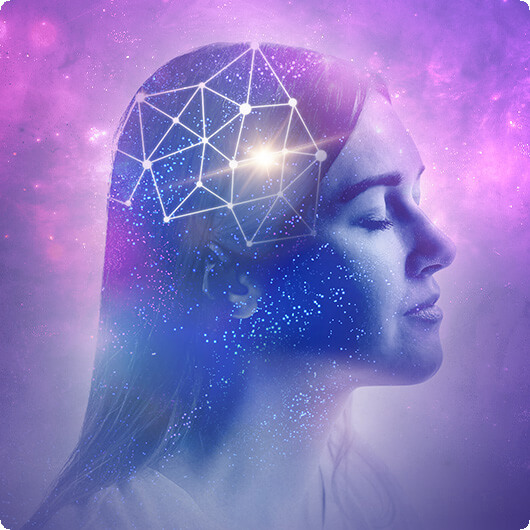
During this illuminating course, you’ll:
- Begin to break free from limited narratives by exploring how the brain constructs identity — and where that story quietly falls apart
- Experience guided inquiries that reveal the difference between thinking and awareness
- Start to release habits of rumination by learning why overthinking feels compulsory — and how it naturally loosens
- Discover how left- and right-brain attention shape stress, meaning, and perception
- Uncover the limitations of addressing worry through thought instead of direct experience
- Understand why trying to fix the mind often makes it louder
- Practice resting in awareness without effort, control, or suppression in order to experience true stillness
- See how language creates problems that don’t exist in lived reality
- Learn to hold identity lightly without losing functionality or connection
- Integrate insight into everyday life with clarity, humility, and ease
What You’ll Discover in These 7 Modules
In this 7-week transformational course, Dr. Chris will guide you through the skills and competencies you’ll need to quiet the mental chatter that feeds illusion and distinguish that from direct experience.
Join the Livestream — or Stream Later to Watch at Your Convenience
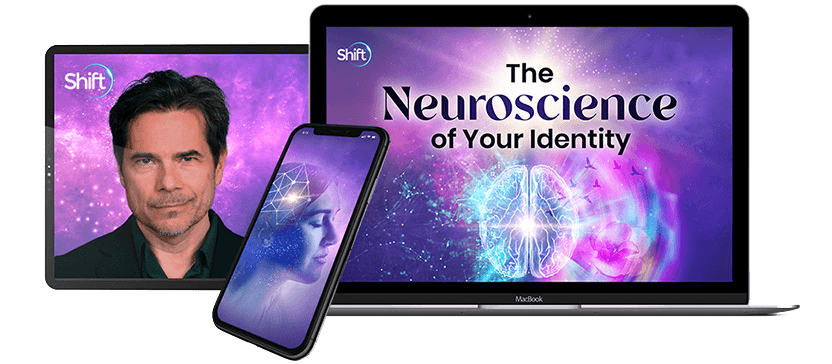
You’ll connect with Dr. Chris and experience his teachings through livestreaming video via any connected device. This connection is easy to use and will enhance the impact of Dr. Chris’ transmissions. Can’t make it live? After each class, you can stream the video and audio recordings to enjoy anytime and anywhere at your convenience.
Weekly Sessions are on 2026-03-04 1:00:00 pm.
This course will feature LIVE teachings, interactive sessions, experiential practices, and Q&A with Dr. Chris. Each session will build harmoniously upon the previous ones, so you’ll develop a complete holistic understanding of the practices, tools, and principles you’ll need to understand your identity beyond the narratives created in the mind.
Module 1: Gain Clarity About Who You Are Beyond the Brain to Break Free From Your Fixed Self (2026-03-04 1:00:00 pm)
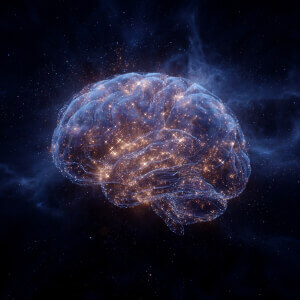
Neuroscience may be presented as a final authority on who we are — yet does the brain actually create consciousness, or does it merely shape experience?
Dr. Chris shares the personal turning point that led him from anxiety and overthinking into neuroscience, and eventually toward asking deeper questions that science alone couldn’t answer.
Explore how the brain works through specialized regions, how personality and behavior can change when the brain changes, and why even this still doesn’t fully explain awareness itself.
Drawing on classic neurological cases, neuroplasticity, and meditation research, this course lays a grounded foundation in brain science — while also revealing where neuroscience reaches its limits.
The result is a more balanced view that integrates scientific understanding with direct experience, setting the stage for a deeper inquiry into self, awareness, and peace.
During this module, you’ll:
- Learn the essential functions of major brain regions in clear, everyday language
- Engage in experiential inquiries that question the assumption “I am my brain”
- Explore whether consciousness can truly be located in the brain
- Understand how neuroplasticity allows experience to reshape neural patterns
- Examine famous cases that challenge the idea of a fixed self
- Discover why neuroscience alone can’t resolve suffering — and where experience takes over
Module 2: Reduce Mental Overwhelm by No Longer Believing Left Brain Stories Are the Truth (2026-03-11 1:00:00 pm)
Why does life feel so complicated, judgmental, and mentally exhausting — even when nothing is “wrong”? Explore how the two hemispheres of the brain attend to the world in radically different ways.
The left brain narrows focus, categorizes, labels, and tells stories. The right brain takes in reality as a living whole.
Through split-brain research, cultural examples, and playful experiments, meet the “left-brain interpreter” — the part of the brain that constantly explains, justifies, and often distorts reality.
This session reveals how most inner conflict arises not from life itself, but from mistaking left-brain stories for truth — and how shifting into right-brain awareness restores presence, ease, and meaning.
During this module, you’ll:
- Understand how left- and right-brain attention differ fundamentally
- Participate in a Heider-Simmel Animation practice to illustrate where “black-and-white thinking” begins
- Recognize how the brain creates stories and mistakes them for reality
- Experience how judgment and categorization generate unnecessary problems
- Learn why you can’t silence the inner narrator — and why you don’t need to
- Practice simple ways to access right-brain awareness
- Discover how awareness beyond thought supports spiritual insight
Module 3: Experience Freedom From Illusions by Challenging Limiting Mental Stories & False Problems (2026-03-18 1:00:00 pm)

What happens when the brain refuses to accept obvious reality? Explore striking neurological cases — such as anosognosia, when people deny clear impairments — revealing how deeply the brain protects its stories.
See how the left brain clings to consistency while the right brain naturally questions assumptions. Through inquiry and experiential practices, learn to distinguish between abstract beliefs and direct awareness.
Concepts like time, ownership, numbers, and even the self are examined not philosophically, but experientially — revealing that many of our “problems” cannot actually be found in lived experience.
As these abstractions dissolve, awareness naturally returns to what is simple, present, and real.
During this module, you’ll:
- See how the brain defends beliefs, even when they conflict with reality
- Practice a simple inquiry exercise to experience the difference between left-brain abstractions and right-brain awareness
- Explore why many concepts feel real but can’t be experienced
- Discover how right-brain awareness dissolves left-brain problems
- Learn why freedom comes from seeing illusions, not fixing them
Module 4: Experience Greater Peace by Integrating Thought & Awareness (2026-03-25 1:00:00 pm)

Does shutting down the thinking mind lead to enlightenment?
Using Jill Bolte Taylor’s My Stroke of Insight as a guide, explore what happens when the left brain goes offline — and why lasting peace requires integration, not escape.
Examine whether or not the sense of self is built from language and abstraction — and what remains of the self when those things fall away. Discover the right brain’s role in empathy, emotion, music, and authentic connection.
Rather than aiming to eliminate the self, learn how to hold it lightly — using it as a tool while staying rooted in awareness. The result is a way of living that honors both clarity and relationship.
During this module, you’ll:
- Understand what Jill Bolte Taylor’s experience reveals — and what it doesn’t
- Discern whether the self can be experienced
- Learn why lasting peace doesn’t come from suppressing thought
- Discover how right-brain awareness deepens compassion and connection
- Explore relationships beyond roles and mental contracts
- Practice expanding awareness through music and presence
Module 5: Find Ease by Seeing Through the Illusion of Thinking (2026-04-01 1:00:00 pm)

Thinking feels normal — but what if it’s actually an altered state that we rarely question?
Explore the difference between thinking and consciousness, and why confusing the two creates suffering. Thoughts arise automatically, one at a time, yet we treat them as authoritative descriptions of reality.
Through slow, experiential exercises, observe thinking as it happens — revealing its fleeting, illusory nature. When thoughts are seen clearly, they lose their emotional charge, and presence becomes more effortless.
Rather than fighting the mind, invite a gentle recognition that restores clarity, peace, and spacious awareness.
During this module, you’ll:
- Experience firsthand that thoughts are not reality
- Engage in experiential inquiry exercises to explore how thinking and consciousness are not the same thing
- Practice observing space and presence beyond thought
- Understand why thinking cannot lead to peace
- Recognize how the sense of self depends on thought
- Discover the subtle illusion embedded in thinking
- Learn why awareness doesn’t need effort or control
Module 6: Release Anxiety by Questioning a Material View of Reality (2026-04-08 1:00:00 pm)

Materialism tells us that we are separate selves living in a world of solid objects — but what if this belief itself fuels anxiety and dissatisfaction?
Examine materialism — not as a philosophy, but as a lived assumption reinforced by language and left-brain abstraction. Explore the difference between the conceptual world of problems and the direct experience of consciousness.
Through inquiry, question whether emotions like anxiety or depression can actually be experienced — or whether they exist only as stories.
Open the door to a more immediate, connected way of being that doesn’t rely on fixing the world to feel at peace.
During this module, you’ll:
- Question the assumption of a purely material world
- Explore how identification with the body creates suffering
- Examine the limits of free will and control
- Understand why words hold power — and how to release it
- Discover why materialism may contribute to anxiety and depression
- Experience the difference between abstract concepts created by thought and what is directly experienced in awareness — and see how many problems dissolve when they’re no longer taken as fact.
Module 7: Live With More Clarity & Lightness in Everyday Life (2026-04-15 1:00:00 pm)

Weave everything together — not as a conclusion, but as a return to life as it is.
Learn how to notice when thinking is present, when it’s believed, and when awareness is already free. Rather than rejecting neuroscience, identity, or thought, discover how to hold them lightly.
The insight that “you are already whole” isn’t an idea to adopt — it’s something to notice beneath thought.
Recognize integration — moving through daily life with humor, humility, and the quiet recognition that much of what once felt serious may never have been what it seemed.
During this module, you’ll:
- Learn how to recognize thinking without believing it
- Understand why peace doesn’t come from mental effort
- Discover multiple modes of consciousness beyond thought
- Practice moving fluidly between thinking and awareness
- Integrate insight into ordinary life and relationships
- Leave with a grounded sense of clarity, ease, and curiosity
SPECIAL BONUS OFFER
In addition to Dr. Chris’s transformative 7-module course, you’ll receive this special bonus offering to complement the course and take your understanding and practice to an even deeper level.
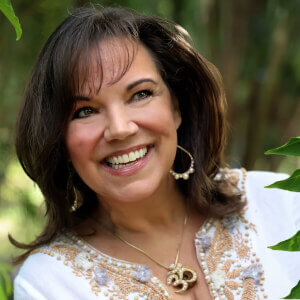
Conversation With the Joy School Founder Lisa McCourt
Video Recording by Chris Niebauer, PhD
In this intimate 15-minute conversation, Dr. Chris and bestselling author Lisa McCourt share their two most powerful insights into cultivating lasting joy. Lisa, whose books have sold more than nine million copies, brings her decades of wisdom from founding The Joy School and writing Free Your Joy. Together, they explore how joy arises naturally when we stop identifying with the mind’s constant commentary. The result is a grounded, accessible discussion that makes happiness feel both practical and deeply attainable.
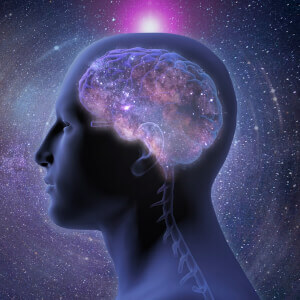
The Right-Brain and Nonduality
Video Recording by Chris Niebauer, PhD
In this 15-minute teaching, Dr. Chris introduces the core functions of the right hemisphere of the brain and how it experiences reality. Unlike the left brain’s world of labels, stories, and separation, the right brain perceives life as whole, connected, and meaningful. This is the neurological basis of nonduality — the direct sense of being part of, rather than separate from, the world. Understanding this shift opens the door to deeper peace, joy, and a felt sense of belonging.
What People Are Saying About Chris Niebauer, PhD…
Professor of Leadership
Stockton University
Speaker and coach at Thinking2.0
Intuitive counselor and spiritual coach
Join the Global Community

The Neuroscience of Your Identity offers some of the most transformational online teachings available, within a thriving global community of learning and practice.
Join fellow students and practitioners to support and inspire each other as you integrate the teachings and practices Chris Niebauer, PhD will share in this powerful program.
You’ll join an international community on the leading edge of manifesting a world grounded in the principles of cooperation, harmony, and reverence for all of life.
Here’s What You’ll Receive

Seven 90-Minute Class Sessions With Chris Niebauer, PhD
Experience a unique opportunity to be mentored by and learn from tenured professor of cognitive neuropsychology Chris Niebauer, PhD — from the comfort of your own home. Each class session includes a livestreaming video option and will guide you to understand your neurological identity. Course sessions are on 2026-03-04 1:00:00 pm.

Seven Video Recordings of Class Sessions
After each class, the video will be available for you to stream in a high-quality format. You’ll never have to worry about missing a session, and you can watch anytime and anywhere at your convenience.

Seven Audio Recordings of Class Sessions
After each class, the audio will be available for you to stream. You’ll never have to worry about missing a session, and you can listen anytime and anywhere at your convenience.

Seven Transcripts of Class Sessions
You’ll also receive the entire class transcription after each session is completed. You can then review, print, and highlight the most important insights and practices you were given.

Seven 30-Minute Interactive Group Practice Sessions
With live class attendance, there will be a 30-minute optional interactive practice session directly following each class. You’ll be placed in an intimate group with several other participants on the Zoom call to interact, share, and do additional practices to help you further integrate the weekly lessons. Practice sessions are not recorded for playback; if you’re unable to attend the live sessions, the online community group allows you to connect with each other and find alternative times to interact.
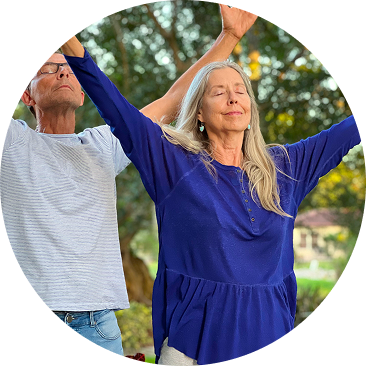
Interactive Exercises and Questions for Each Lesson
Between class sessions, you’ll have the option of completing related exercises, practicing new tools, and answering questions to accelerate your learning and integrate each week’s lesson.

Online Community
Our exclusive online community is the perfect place to continue your discovery process after each class. Here, you can continue the discussion about your course materials and interact with your fellow students to take your exploration to an even deeper level.
An Unprecedented Opportunity to Join the Online Course, The Neuroscience of Your Identity
We feel honored that Chris Niebauer, PhD, has chosen to partner with The Shift Network to offer this exclusive LIVE online course. This is a unique opportunity to interact directly with a tenured professor of cognitive neuropsychology whose powerful insights and pioneering work are helping us heal and awaken ourselves and our world.
If you’re serious about breaking free from the limited scope of the mind, then you owe it to yourself, your loved ones, and our world to take this one-of-a-kind program.
If you’re ready to take the next step in your own evolution, click the register button below to reserve your space now.
Your Satisfaction Is 100% Guaranteed!

If you don’t absolutely LOVE The Neuroscience of Your Identity — or don’t feel that it meets your needs — please submit your refund request form on or before March 18, 2026 and we’ll happily issue qualifying customers a refund.
More Praise for Chris Niebauer, PhD
Bestselling author and founder of The Chopra Foundation
Author of Free Your Joy and founder of Joy School
About Chris Niebauer, PhD
EDIT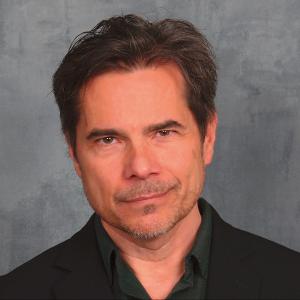
Chris Niebauer earned his PhD in cognitive neuropsychology at the University of Toledo, specializing in the differences between the left and right sides of the human brain. He is the author of the bestselling book No Self, No Problem: How Neuropsychology Is Catching Up to Buddhism and the accompanying workbook.
He was a professor at a state university in Pennsylvania for 22 years, where he taught courses on consciousness, mindfulness, left-brain and right-brain differences, and artificial intelligence. He has been a guest on several podcasts, including Buddha at the Gas Pump and The Chopra Well with Deepak Chopra.
No Self, No Problem has held the number one sales spot in neuropsychology several times in the U.S. and several other countries. It was the number one bestselling book in the Netherlands for several weeks. It has also held the number-one spot in France, Germany, and Australia. It is now translated into German, Polish, Russian, Spanish, French, Turkish, and Korean. The Wall Street Journal listed it as the second-best book on the brain.
Frequently Asked Questions
What’s a virtual course?
Can I still benefit from the course if I miss the live classes?
Can you tell me about the private online community group?
Are there scholarships available for this training?
Please note: Scholarship applications must be submitted before the refund deadline, as we are unable to accept applications after that point.
What’s your refund policy?
If you’re within the refund period, the deadline to receive a full refund is March 18, 2026. To request a refund, please complete this refund request form and submit your request. Qualifying refunds will be processed within five business days, and you’ll receive an email confirming the refund.
We’d also love the opportunity to address and resolve your concerns directly. If there’s anything we can assist with, please get in touch with us at [email protected] — we’re here to help!
Please note: Refund requests are not accepted after the deadline or for courses purchased with scholarship awards.