

Brian Siddhartha Ingle, ND, DO
&
Co-Founder of Living Somatics & Master Somatic Movement Educator and Therapist
Maya Gayatri Andersson, MSME, MSMT
This program is considered a prerequisite to becoming certified as a Living Somatics Movement Teacher.
Restore ease of movement, function, and agility, and awaken whole-body regeneration through somatic awareness and practices that cultivate and amplify the body’s own healing forces.
Engage your spinal junctions — cranio-cervical, cervico-thoracic, thoraco-lumbar, and lumbo-sacral — as gateways for change and regulators for function.
There’s a big difference between working on the body and learning to cooperate with the intelligence that is already sustaining us.
Conventional healing approaches typically attempt to fix what appears to be “wrong” through following and managing symptoms…
Living Somatics, a self-healing modality created by osteopathic doctor and somatic movement educators Brian Siddhartha Ingle and Maya Gayatri Andersson, is a form of neuromuscular education that teaches you to sense and relate to the underlying health already present in your body.
Through guided movement and deepened awareness, you learn to feel the body’s self-organizing intelligence in action — and support it directly through awareness rather than force.
Brian and Maya teach that the right somatic movements and practices can initiate whole-body regeneration, restoring vitality and coherence, improving function, and strengthening resilience.
In this 20-module training, you’ll learn the neuromuscular practices and somatic principles they’ve used to help thousands of people ease chronic pain and stiffness, enhance self-regulation and mobility, and enter a state of calm, grounded awareness that supports lasting health and wellbeing.
You’ll be guided in somatic awareness and movement practices that release habituated constrictions in the spine, chest, hips, back, shoulders, and neck, improving blood flow, flexibility, and joint function — and even degenerative disorders.
You’ll learn how to scan the body for health through interoception and exteroception, using embodied listening and somatic movement to sense the subtle signals of regulation…
… as well as patterns of held tension, trauma, strain, or nervous system dysregulation in yourself and others.
You’ll discover optimized mechanics for everyday movements, such as turning, that reduce strain on muscles and joints, improve coordination, and restore confidence in common movements such as bending and reaching.
And, you’ll receive time-tested protocols for creating a sense of safety for clients — from how to use non-triggering language to intake and assessment perceptual skills such as listening, observation, and inquiry that will help you meet each individual where they are.
By the end of this training, you’ll have a complete set of somatic tools that empower you to create the conditions the body needs for vibrant health and wellbeing — including a self-care practice you can carry into your everyday life.
Who This Training Program Is For
This training is for you if you’re ready to heal yourself — and help others do the same — through embodied, awareness-based somatic education — transforming movement and inner inquiry into practical tools for resilience and nervous system regulation.
In doing so, you’ll step into a new model of practitioner, one who confidently integrates Living Somatics with functional anatomy, neurophysiology, and emerging insights from quantum biology.
This program is for:
- Self-healing and holistic health enthusiasts
- Somatic movement educators
- Somatic education trainers
- Bodyworkers or manual therapists
- Yoga, Pilates, or movement teachers
- Integrative or functional health practitioners
- Pain and posture specialists
- Nervous system regulation coaches
- Workshop or retreat facilitators
- Coaches, counselors, and therapists looking for an embodied modality to deepen the effect of their work with clients
What You’ll Explore in This 5-Month Somatic Training
Across 20 progressive modules, you’ll move from foundational self-regulation to refined perceptual skill — integrating anatomy, neurophysiology, movement, and embodied presence into a coherent system of learning and healing.
You’ll learn how to:
- Apply Neurophysiology & Whole-Body Organization: Explore developmental movement, biotensegrity, and neural reorganization to improve transitions, efficiency, and coordinated self-use.
- Ease Anxiety and Chronic Posture Issues: Restore your center through front-body release, breath, and orientation while reducing spinal compression and back tension.
- Release Lateral Restrictions, Retrain Red Light, Green Light, and Trauma Reflexes: Recover fluid spinal rotation, turning, and integrated movement without rigidity or force.
- Enhance Stability, Mobility & Ease: Balance hip rotators, correct femoral alignment, and experience shoulders and hips as interrelated systems.
- Reverse Chronic Muscular Contraction: Neurological re-education and lessons for upright, functional sitting, turning, and daily movement.
- Transform Breath, Walking & Gait Efficiency: Experience breathing as a whole-body regulator of posture and emotion, and repattern walking as an integrated, rotational pattern that improves balance, timing, and reduces strain.
- Grow Interoception & Nervous System Regulation: Use scanning, grounding, and embodied Polyvagal principles to refine perception, support pelvic organization, and cultivate resilience and adaptability.
- Integrate Somatic Principles Into Practice & Daily Life: Establish a sustainable self-practice, apply movement inquiry to common conditions, and understand how tone, circulation, and coordination shift through awareness-based learning.
- Develop Non-Directive Communication: Practice intake and assessment through observation and inquiry, and cultivate the embodied presence required to hold space safely and skillfully.
Create a Learning Experience That Fits Your Life
Join the Livestream — or Enjoy Flexible Access to the Recorded Sessions Anytime, Anywhere!
Connect via livestreaming on any connected device.
Not able to attend the live sessions? No problem! With our flexible access options and Brian’s extensive handouts and in-class demos as support, you have the freedom to create your own classroom experience on your own terms.
Whether you want to dive deep into regularly scheduled weekly training sessions or savor the journey over an extended time period, you can choose how to best benefit from this one-of-a-kind training program:
- Tailor Your Experience: Watch the sessions at your own pace, whenever it suits you. You can mix and match, replay your favorite parts, or spread out the content over several days (or even months).
- Ultimate Flexibility: Whether you’re an early bird or a night owl, the recorded sessions are available to you 24/7 so you can create a learning experience that fits your schedule.
Here’s What You’ll Receive

Twenty 120-Minute Class Sessions With Brian Siddhartha Ingle & Maya Gayatri Andersson
Experience a unique opportunity to be mentored by and learn from the co-founders of Living Somatics, who have spent decades developing their method. Program sessions are on 2026-04-21 8:00:00 am.

Video and Audio Recordings of Class Sessions
Video and audio recordings will be available for you to stream in a high-quality digital format after each live class session. You’ll never have to worry about missing a class, and you can access the sessions anytime and anywhere at your convenience.

Transcripts of Class Sessions
You’ll also receive the entire class transcript after each session is completed. You can then review, print, and highlight the insights and practices you found most impactful.
Interactive Group Practice Sessions
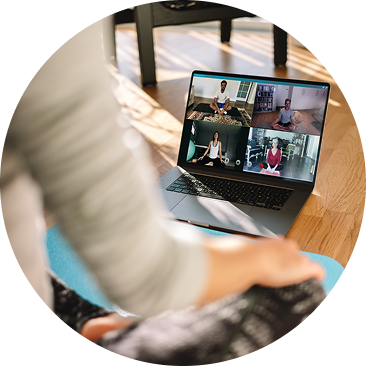
Incorporated into each live class, you'll have the option to participate in an interactive practice session. In small breakout groups on Zoom, you’ll connect with fellow participants to share insights, ask questions, and practice techniques to deepen your integration of the weekly material. The program’s assistants will randomly join breakout rooms to offer real-time feedback to deepen your learning.

Somatic Movement Lessons
Between weekly sessions, you’ll return to the somatic lessons you’ve learned, refining them through practice so the learning becomes embodied and integrated.

Online Community
Our exclusive online community is the perfect place to continue your discovery process after each class. Thus, you can continue the discussion about your program materials and interact with your fellow students to take your exploration to an even deeper level.
About Brian Siddhartha Ingle, ND, DO
EDIT
Dr. Brian Siddhartha Ingle is an osteopath, naturopath, and somatic educator whose work bridges ancient healing wisdom with modern science. As the founder of Quantum Embodied Osteopathy and co-founder of Living Somatics, he integrates somatic healing, biodynamic osteopathy, circadian biology, and quantum biology into a unified approach that honors the body as a living field of intelligence.
Through his teaching, writing, and practice, Brian reveals how light, water, breath, and movement weave together the fabric of life and consciousness. His method invites a deep return to rhythm and presence — where fascia flows like light, the nervous system softens into coherence, and the Breath of Life restores its natural song.
He teaches internationally, guiding practitioners, healers, and seekers into direct contact with the health that is never lost — the silent pulse beneath thought, the luminous awareness within form. In this work, movement becomes meditation, touch becomes prayer, and biology becomes the language of awakening.
About Maya Gayatri Andersson, MSME, MSMT
EDIT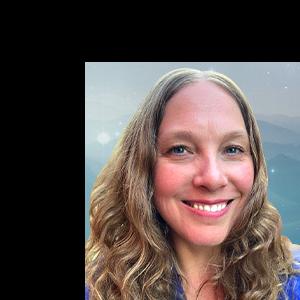
Maya Gayatri Andersson (formerly Schriefer), MSME, MSMT, BScEd, CHSE, is a registered Master Somatic Movement Educator and Therapist specializing in pain management, embodiment, and trauma healing. She is a certified Clinical Hanna Somatic Educator who had the privilege of being mentored by the late somatic pioneer Dr. Eleanor Criswell Hanna for more than 20 years.
Maya, a graduate of The Novato Institute for Somatic Research and Training, is the co-founder of Living Somatics, which is dedicated to equipping people to achieve somatic freedom by offering international classes and professional trainings.
As part of Maya’s mission is to make somatic disciplines available globally, she co-hosted The Shift Network Somatic Movement Summits with Brian Siddhartha Ingle from 2020-2022. She also served extensively on the board of the International Somatic Movement Education and Therapy Association (ISMETA) from 2021-2025.
For more than 25 years, Maya has traveled the world teaching somatic movement and pathways to greater self-connection. Some of the somatic modalities she has been trained in are the Feldenkrais Method®, Body Mind Centering®, Biodynamic Craniosacral Therapy, Qigong, martial arts, somatic yoga, dance, meditation, energy healing work, Equine Hanna Somatics, and Native American Tracking. Maya holds a bachelor’s degree in Education focusing on health promotion, education, and kinesthetic learning, and undertook additional university studies in physiotherapy, behavioral science, and peace and conflict resolution.
Based in Sweden, Maya consults clients and develops and leads somatic practitioner trainings and workshops both in-person and online. She also works in a clinic, specializing in trauma-informed treatment for women in addiction recovery who are healing from abuse. Maya is passionate about supporting and encouraging her clients and students to develop somatic skills for self-connection, resilience, and lasting transformation.
Program Details & Curriculum
Weekly Class Sessions are on 2026-04-21 8:00:00 am.
This training unfolds across 20 LIVE modules, combining lecture, guided somatic movement lessons, experiential integration, and interactive Q&A with Brian and Maya.
Each session builds progressively — layering philosophy, functional anatomy, neurophysiology, and embodied practice — so concepts are felt and integrated in your own body.
The program begins by establishing a foundation in somatic self-healing. Early modules explore anxiety patterns, habitual posture, spinal compression, and lateral imbalance — introducing core principles such as awareness-based movement, sensory-motor amnesia, and reflex physiology. You’ll learn how release and coordination arise through attention and slow movement rather than correction or force.
The final phase of the training integrates neurophysiology, developmental movement, and the art of holding space. You’ll explore how attention shapes neural organization, how simple developmental patterns reorganize the whole system, and how embodied presence creates the conditions for transformation.
This progressive structure allows you to move from personal exploration to applied understanding — integrating anatomy, perception, and nervous system awareness into a coherent somatic framework.
By the completion of the program, you’ll be equipped to restore movement efficiency, support nervous system regulation, and facilitate learning with clarity, precision, and grounded confidence.

UNIT 1: Foundations of Somatic Self-Healing — Principles, Practice & Embodied Learning
(Modules 1-7)
This foundational unit introduces somatic movement education as a living system of self-healing grounded in philosophy, neuroscience, and direct bodily experience.
Drawing from Plato’s two systems of medicine, students explore the distinction between external intervention and the body’s innate self-regulating intelligence.
Through a progression of gentle, awareness-based movement lessons, you’ll learn how somatic education restores choice, reduces habitual tension, and reorganizes movement from the inside out.
Key concepts such as habituation, embodied anatomy, pandiculation, and daily self-practice are introduced not as theory alone, but as lived experience.
This unit establishes the core framework for the training — shifting from effort-driven correction toward sensing, listening, and trusting the body’s self-correcting mechanism as the primary source of healing and learning.
Key Takeaways
- The formula for self-healing: awareness, regulation, and intelligent movement
- Core principles and strategies of somatic education versus exercise-based approaches
- Understanding Plato’s two systems of medicine and their relevance to modern somatic healing
- Somatic habituation and embodied anatomy as lived, sensory experiences
Experiential lessons:
- Front-body opening (orientation and breath)
- Back-body opening (support and stability)
- Side-body opening (integration and balance)
- Turning lessons (sitting and lying down supine)
- Hip lesson for restoring the function and position of the head of the femur
- Establishing a daily self-practice for ongoing personal development
Module 1: Reclaiming the Center — Anxiety, the Front Body, and the Foundation of Movement (2026-04-21 8:00:00 am)
Brian and Maya will introduce you to the philosophical and experiential foundations of somatic self-healing through Plato’s two systems of medicine — external intervention versus the body’s inherent capacity for self-regulation.
They will then guide you to experience this distinction directly through the Open the Front lesson, working with the somatic pattern of anxiety. By gently releasing the hip flexors, abdominal muscles, and lower back, you’ll rediscover the body’s center as an organizing reference point rather than a place of effort.
This establishes the relationship between orientation, breath, and movement, offering immediate relief from lower back tension while restoring a sense of internal support.
Rather than correcting posture, you’ll learn how awareness restores function and choice, setting the tone for somatic learning throughout the training.
In this session, you’ll:
- Explore Plato’s two systems of medicine — and how they can be applied to modern somatic healing
- Discover that anxiety is a neuromuscular pattern, not a personal flaw
- Restore the body’s center through front-body release
- Improve breath, orientation, and lower back ease
- Experience self-healing as an internal process, not an intervention
- Be guided in a front-body opening practice — improving breathing capacity and forward orientation and releasing protective tension held in the chest and abdomen to allow back bending
Module 2: Support and Stability - Releasing Habitual Posture, Spinal Compression & Chronic Back Tension (2026-04-28 8:00:00 am)
Next, you’ll explore the Green Light reflex, the habitual postural response associated with withdrawal, collapse, and chronic back tension. Through the Open the Back Body lesson, you’ll work directly with the erector spinae muscles along the spine to restore voluntary control and support.
Brian and Maya will introduce this self-healing formula, emphasizing awareness, self-regulation, and epigenetic factors as the foundation for change.
Rather than strengthening or stretching, you’ll learn how slow, conscious movement retrains the nervous system, reversing sensory-motor amnesia.
As the back body releases, many people experience improved upright support, reduced spinal compression, and a renewed sense of stability without effort.
In this session, you’ll:
- Understand the Green Light reflex and collapse patterns
- Release chronic back tension through awareness-based movement
- Learn how to reverse sensory-motor amnesia in spinal muscles
- Experience stability without rigidity or effort
- Apply the formula for self-healing through movement
- Be guided in the back-body opening practice (support and stability) — reawakening the body’s natural sense of grounding and strengthening postural support and nervous system
Module 3: Somatic Movement Principles & Side-to-Side Freedom - Restoring Lateral Balance and Integration (2026-05-05 8:00:00 am)
Next, Brian and Maya will focus on lateral organization through the Open the Side Body exercise. You’ll explore how habitual asymmetries restrict rib mobility, breathing, and hip movement, often contributing to back pain and imbalance.
They will then introduce core somatic movement principles and strategies, emphasizing how slow, differentiated movement restores coordination and balance.
By lengthening the obliques and side waist muscles, you’ll experience improved side-to-side flexibility and a greater sense of integration across the whole body.
You’ll deepen your understanding of how freedom of movement arises not from effort, but from restoring sensory clarity and choice.
In this session, you’ll:
- Discover the role of lateral organization in posture and movement
- Release side-body restrictions affecting ribs and hips
- Improve balance and coordination through somatic awareness
- Understand movement principles versus exercise techniques
- Experience integration rather than isolated correction
- Be guided in a side-body opening practice to integrate left–right movement patterns, improve lateral mobility, and enhance coordination and balance
Module 4: Habituation & Turning - Reversing Recurrent Movement Patterns & Restoring Functional Rotation (2026-05-12 8:00:00 am)
Brian and Maya will introduce you to the concept of somatic habituation through the lens of the Red Light, Green Light, and Trauma Reflexes, alongside the theory of embodied anatomy.
They’ll demonstrate how habitual movement patterns become neurologically fixed, and how they can be gently reversed. The accompanying Turning Lesson restores functional rotation by re-educating the nervous system to coordinate the spine, ribs, and pelvis as a whole.
Rather than forcing range of motion, you’ll learn how turning emerges naturally when effort is reduced and awareness is refined — emphasizing how functional movement is a whole-body event, not a local action.
In this session, you’ll:
- Understand somatic habituation and reflexive postures
- Explore Red Light, Green Light, and Trauma Reflex Patterns
- Learn why turning is a whole-body function, not a segmental action
- Discover anatomy through sensation rather than visualization
- Restore ease and coordination through rotation
- Be guided in supine turning practices to refine spinal organization, move with more fluidity and ease, and engage your whole body when you turn
Module 5: Evolution, History & Hip Intelligence - Restoring Joint Function While Freeing the Hips and Legs (2026-05-19 8:00:00 am)
Next, you’ll review somatic education within its historical and evolutionary context, tracing its development over the last 70 years. The somatic movement lesson Freeing the Hips, focuses on balancing the internal and external rotators of the hip joints.
Brian and Maya will clarify how hip dysfunction contributes to spinal strain — and how proper neuromuscular balance supports the healthy positioning of the femoral head within the socket.
Rather than strengthening or stretching, you’ll learn how precise sensory-motor re-education improves joint function and may reduce long-term degenerative patterns such as osteoarthritis.
You’ll start to see how intelligent movement restores alignment from the nervous system outward.
In this session, you’ll:
- Explore evolutionary and historical perspectives on somatic education
- Balance internal and external hip rotators
- Support femoral head alignment through awareness
- Prevent joint degeneration through functional movement
- Apply somatic principles to joint health
- Be guided in a hip practice for restoring the function and position of the head of the femur — optimizing hip joint alignment and function, and relieving strain through the pelvis and lower back
Module 6: Pandiculation & Functional Turning in Sitting - Reducing Strain and Reversing Chronic Muscle Contraction (2026-05-26 8:00:00 am)
Brian and Maya will introduce pandiculation as the central mechanism for reversing chronic muscular contraction and restoring voluntary control.
They’ll demonstrate how to apply this principle in the Sitting Turning lesson, which builds on earlier rotation work, to deepen your understanding of how to turn using the whole body rather than isolating the neck or spine.
As you learn how to integrate somatic learning into upright, everyday movement, you’ll discover that efficient turning reduces strain, enhances coordination, and restores confidence.
This affirms that functional movement is learned — not forced — and that aging need not mean rigidity or decline.
In this session, you’ll:
- Explore pandiculation as neurological re-education
- Translate somatic learning into upright function
- Discover turning as an integrated, whole-body action
- Reduce strain in daily activities
- Understand aging as adaptation, not deterioration
- Be guided in a sitting and turning lesson — supporting smoother transitions and spinal freedom in daily life
Module 7: Integration & Daily Self: Practice - Establishing a Practice That Supports SelfHealing (2026-06-02 8:00:00 am)
Now you’ll start to integrate the principles and lessons Brian and Maya have shared so far, through daily self-practice and beginning to master total core control.
Next, they’ll show you how to combine specific muscle releases into a coordinated, full-body movement pattern that supports daily comfort and function. The emphasis is on sustainability — developing a personal practice that maintains neuromuscular health, adaptability, and ease over time.
Rather than “doing exercises,” you’ll learn how to listen, adjust, and self-regulate — reinforcing the notion that when somatic education is embraced as a lifelong skill set, it can contribute significantly to increased autonomy, resilience, and ongoing learning.
In this session, you’ll:
- Integrate individual lessons into whole-body coordination
- Establish a sustainable daily somatic self-practice
- Learn how to support long-term mobility, comfort, and independence
- Apply somatic principles to everyday life
- Embody self-healing as an ongoing process
- Learn how to establish a daily self-practice for ongoing personal development that builds body awareness and resilience through simple, consistent somatic habits

Unit 2: Functional Anatomy, Perception & Embodied Somatic Practice
(Modules 8-13)
This unit develops a functional understanding of anatomy as it is lived and perceived through movement. You’ll explore breathing, walking, spinal organization, and joint function as integrated, whole-body processes rather than isolated mechanics.
Each lecture is paired with a guided somatic movement lesson, allowing you to experience how awareness, scanning, and inquiry refine coordination and reduce habitual effort.
Core joints — including the hips and shoulders — are explored as dynamic relationships that influence posture, balance, and ease in daily life.
Alongside anatomical exploration, you’ll cultivate precise language and internal observation skills that support clarity, safety, and self-directed learning without force or correction.
This unit explores common conditions supported by somatic movement education, grounding theory in practical application. It builds perceptual skills, movement intelligence, and teaching presence to help you guide embodied learning with confidence and sensitivity.
Key Takeaways
- Functional anatomy of breathing, walking, and the spine as whole-body movement patterns
- The role of scanning and inquiry in refining perception and supporting self-regulation
- Understanding hip and shoulder joints as dynamic organizers of movement and stability
- Developing clear internal awareness and descriptive language for somatic experience
- Applying somatic movement principles to common functional conditions
- Inquiry into conditions that somatic movement can support
Experiential lessons:
- Breathing lesson (anatomy of breathing and spinal mobility)
- Walking lesson (breaking down the walking pattern)
- Pelvic clock lesson (scanning and pelvic-spinal differentiation)
- Shoulder lesson (shoulder organization in relation to the whole)
- Hip lesson (functional anatomy of the hip joint in relation to the whole)
- Side-lying waist and trunk turning lesson (the function of coupled rotation and sidebending)
- Spine movement lesson
Module 8: The Functional Anatomy of Breathing - Regulating Emotions & the Nervous System (2026-06-09 8:00:00 am)
You’ll be introduced to the concept of breathing as whole-body movement, rather than a mechanical act of inhalation and exhalation.
You’ll review the functional anatomy of breathing, including the diaphragm, rib cage, and spine — plus their relationship to posture, tone, and nervous system regulation.
Breathing is framed as an organizing force that influences ease, effort, and emotional state. Brian and Maya will guide you in experiential explorations that restore natural breathing patterns by reducing unnecessary muscular holding.
Through gentle movement and awareness, you’ll sense how breath distributes through the body, supporting coordination and self-regulation. This information lays the foundation for understanding how breath informs all movement and learning.
In this session, you’ll:
- Understand breathing as whole-body, functional movement rather than a mechanical process
- Gain awareness of the diaphragm, rib cage, spine, and their relationship to posture and tone
- Recognize habitual holding patterns that interfere with natural breathing
- Use movement and awareness to restore ease and adaptability in breathing
- Experience how breath supports nervous system regulation and movement learning
- Be guided in a breathing lesson— freeing the diaphragm and improving cardiac sinus arrhythmia, respiratory ease, spinal mobility, and nervous system regulation
Module 9: The Importance of the Scan - Developing Interoceptive Awareness & Improving Pelvic Mobility (2026-06-16 8:00:00 am)
You’ll explore scanning as a means of cultivating interoception, refining perception, and supporting self-regulation rather than “checking” or fixing the body.
Brian and Maya will share how scanning prepares the nervous system for change and learning, and how it makes conscious the change that has taken place in somatic exploration.
The Pelvic Clock lesson offers a structured yet exploratory movement experience that enhances awareness of pelvic organization and spinal relationships.
Through gentle, circular movements, you’ll start to sense habitual holding patterns and discover greater mobility and support. This can strengthen your capacity to guide your attention skillfully within somatic demonstrations.
In this session, you’ll:
- Understand the scan as a foundational process for somatic learning
- Develop interoceptive awareness without judgment or correction
- Use scanning to support nervous system regulation and readiness to learn
- Integrate scanning as a skillful tool within somatic teaching and practice
- Be guided in the Pelvic Clock practice — refining sensory mapping and coordination with the spine and improving low back comfort, pelvic mobility, and core organization
Module 10: Understanding Walking Patterns - Shifting Sensory Awareness to Improve Gait Quality & Functional Health (2026-06-23 8:00:00 am)
Walking is explored as an integrated, whole-body pattern rather than a sequence of steps. Explore how weight transfer, rotation, balance, and timing emerge through the coordinated action of the feet, pelvis, spine, and head.
You’ll learn how to recognize habitual strategies that interfere with efficient walking.
Brian and Maya will show you how walking can be re-experienced through slow, attentive exploration that refines your perception of support, momentum, and ease — enhancing efficiency and balance while reducing strain in the hips, knees, and lower back.
You’ll discover how small shifts in awareness can transform gait quality. This deepens your understanding of walking as a primary expression of human organization and functional health.
In this session, you’ll:
- Understand walking as an integrated, coordinated whole-body pattern
- Recognize the roles of weight transfer, timing, and rotation in efficient walking
- Identify habitual movement strategies that disrupt balance and flow
- Refine gait through slowed movement and heightened sensory awareness
- Apply walking awareness to improve ease and coordination in daily life
- Be guided in a walking practice — a re-patterning of walking mechanics through somatic awareness that improves whole-body use during walking
Module 11: Anatomy of the Hip Joint - Optimize Stability & Mobility for Greater Ease and Efficiency (2026-06-30 8:00:00 am)
The hip joint is explored as a central organizer of posture, balance, and locomotion. With Brian and Maya’s insightful guidance, you’ll examine the relationship between the hips, pelvis, spine, and legs, emphasizing functional movement rather than isolated muscle action.
You’ll learn how hip organization influences ease in sitting, standing, and walking. This somatic movement exploration invites you to experience hip movement with curiosity and reduced effort.
Through slow, attentive movements, habitual tension patterns are revealed and softened. This supports clearer movement organization, offering a more efficient relationship between stability and mobility.
In this session, you’ll:
- Understand the hip joint as a primary organizer of posture and movement
- Explore the relationship between the hips, pelvis, spine, and legs
- Differentiate stability from unnecessary muscular holding
- Improve hip mobility through awareness-based movement
- Apply hip organization principles to sitting, standing, and walking
- Be guided in a hip practice — sensing the hip joint’s role within whole-body movement patterns and supporting smoother gait, joint longevity, and reduced compensatory strain
Module 12: Embodied Anatomy of the Shoulder Joint - Reducing Effort & Strain While Improving Reach and Upper Body Freedom (2026-07-07 8:00:00 am)
Explore the shoulder as a complex, relational system involving the rib cage, spine, clavicle, and arm. Brian and Maya will share the shoulder’s role in reaching, support, and expression, while addressing common misconceptions that lead to strain and restriction.
You’ll examine shoulder movement through gentle, guided awareness. Attention is placed on reducing excess effort and improving coordination between the arms and the rest of the body — supporting freer movement, clearer self-use, and a more integrated sense of upper-body organization.
In this session, you’ll:
- Understand the shoulder as a relational system rather than an isolated joint
- Explore the relationship between the arms, rib cage, clavicle, and spine
- Reduce unnecessary effort in reaching and arm movement
- Improve coordination and freedom through embodied shoulder exploration
- Apply shoulder awareness to functional and expressive movement
- Be guided in a shoulder practice that reduces tension throughout the entire shoulder girdle, while improving reach and upper-body freedom
Module 13: Conditions Somatic Movement Can Support by Optimizing Spinal Rotation & Pelvic Organization (2026-07-14 8:00:00 am)
Brian and Maya will share how somatic movement education can support people experiencing pain, stiffness, coordination challenges, or stress-related patterns — without positioning the work as diagnosis or treatment.
The side-lying movement exercise explores turning of the waist and trunk with minimal effort and maximal sensory feedback.
This position reduces gravitational demand, allowing you to sense spinal rotation and pelvic organization more clearly, cultivating both movement intelligence and teaching clarity.
In this session, you’ll:
- Understand how somatic movement education can support common functional conditions
- Differentiate inquiry-based learning from diagnosis or treatment
- Explore spinal rotation and trunk organization in a side-lying position
- Integrate anatomy, perception, and inquiry into practical application
- Be guided in a side-lying waist and trunk practice to explore the link between rotation and sidebending, increasing spinal adaptability, coordination, and comfort in twisting

Unit 3: Nervous System Regulation, Biotensegrity, and the Art of Somatic Teaching
(Modules 14-20)
This unit deepens your capacity to work with the nervous system, movement patterns, and teaching presence as integrated aspects of somatic education.
Core concepts from Polyvagal Theory and neurophysiology provide a framework for understanding safety, threat, and regulation as lived bodily states rather than abstract ideas.
Biotensegrity is introduced as a model for whole-body organization, revealing how force, tone, and adaptability distribute through the system.
You’ll learn how to assess movement and nervous system states with clarity and sensitivity, and how somatic education reaches beyond symptom relief into emotional and behavioral regulation.
Movement lessons emphasize grounding, orientation, and self-agency, including explorations that unwind anxiety patterns. The unit culminates in developing the skill of holding space — learning how presence, pacing, and attunement support learning, safety, and lasting transformation.
Key Takeaways
- Understanding Polyvagal Theory as a framework for safety, regulation, and learning
- Biotensegrity as a model for whole-body organization and adaptive movement
- The neurophysiological basis of somatic learning and self-regulation
- Intake and assessment as relational, perceptual skills rather than diagnostic procedures
- The physiological and emotional reach of somatic movement education
- Developing presence and the capacity to hold space
Experiential lessons:
- Pushing toes lesson (grounding, orientation, and nervous system support)
- Rolling from back to sitting lesson (biotensegrity and whole-body coordination)
- Hip-joint freeing lesson (mobility, stability, and adaptability)
- Lifting head on the belly lesson (optimizing whole body self-use in relation to the head and neck)
- Unwinding anxiety lesson (gentle self-regulation and pattern resolution)
Module 14: Applying Polyvagal Theory - Recognizing Nervous System States & Regulation (2026-07-21 8:00:00 am)
You’ll be introduced to Polyvagal Theory as a practical, embodied framework for understanding nervous system states.
Rather than focusing on concepts alone, Brian and Maya will share how safety, mobilization, and shutdown are experienced through posture, tone, breath, and movement — emphasizing regulation as a dynamic process shaped by perception and context.
The Pushing Toes exercise offers a simple yet powerful movement exploration that supports grounding, orientation, and self-agency.
Through gentle pressure and clear intention, you’ll experience how contact with the ground influences nervous system tone and emotional stability, providing foundational skills for working with regulation through movement.
In this session, you’ll:
- Understand Polyvagal Theory as a lived, embodied experience
- Recognize nervous system states through posture, tone, and movement
- Use ground contact to support safety, orientation, and self-agency
- Experience regulation as dynamic and context dependent
- Apply simple movements to support nervous system regulation
- Be guided in the Pushing Toes practice — exploring how the feet and toes initiate whole-body orientation and movement
Module 15: Non: Directive Language for Nervous System Safety - Integrating Anatomy, Perception & Inquiry (2026-07-28 8:00:00 am)
Brian and Maya will share how language can be used to amplify somatic learning, using precise yet non-directive vocabulary that supports nervous system safety, curiosity, and self-discovery.
You’ll learn how to differentiate between corrective movement instructions and facilitated somatic learning, by focusing on spinal organization through gentle inquiry and exploration — observing how the spine adapts, organizes, and responds to attention and movement.
This exploration integrates anatomy, perception, and inquiry, strengthening your confidence in applying somatic principles in real-world contexts.
In this session, you’ll:
- Understand how language shapes learning in somatic education
- Develop clear, non-directive vocabulary that supports self-discovery
- Distinguish teaching movement from facilitating learning
- Cultivate clarity, safety, and curiosity through precise verbal cues
- Explore spinal organization through gentle movement and awareness
- Recognize patterns of adaptation, compensation, and ease in the spine
- Be guided in a spine movement practice — refining awareness of flexion, extension, rotation, and sidebending to promote spinal resilience and mobility
Module 16: Physiological & Emotional Regulation Through Somatic Education - Supporting Resilience and Adaptability (2026-08-04 8:00:00 am)
Brian and Maya will share how somatic education influences not only movement quality, but also physiological and emotional regulation — stimulating changes in movement patterns that affect tone, breath, circulation, and nervous system state.
You’ll gain a broader understanding of how somatic work supports resilience and adaptability, by focusing on freeing the hip joints as a gateway to improved movement, stability, and ease.
Through slow, attentive exploration, you’ll experience how releasing habitual holding supports both physical freedom and emotional grounding.
In this session, you’ll:
- Understand the physiological reach of somatic movement education
- Recognize links between movement, tone, and regulation
- Explore hips as central organizers of stability and mobility
- Reduce habitual holding to support adaptability
- Apply somatic principles to daily movement and resilience
- Be guided in a hip-joint freeing practice — restoring sensing and movement options in the hip joints and increasing mobility while supporting joint stability and adaptable movement
Module 17: Biotensegrity & Whole: Body Organization — Improving Movement Transitions Through WholeBody Coordination (2026-08-11 8:00:00 am)
Explore how tension and compression distribute through the whole body, allowing movement to emerge with efficiency rather than effort. You’ll learn how to recognize that force is transmitted across the system rather than localized in individual parts.
Brian and Maya will guide you in movement exercises that focus on transitions — from lying to sitting — emphasizing continuity, sequencing, and whole-body support.
This movement exploration reveals how organization improves when effort is reduced and coordination is allowed to emerge. Biotensegrity becomes directly felt rather than intellectually understood.
In this session, you’ll:
- Understand biotensegrity as a whole-body organizational model
- Recognize how force and tone are distributed throughout the system
- Experience movement efficiency through reduced effort
- Improve transitions through sequencing and continuity
- Apply biotensegrity principles to functional movement
- Be guided in a rolling from back to sitting practice — revealing how the body organizes through distributed support rather than effort, while improving fluid movement transitions and whole-body integration
Module 18: Intake & Assessment as Perceptual Skills — Meeting Others Through Non: Corrective Listening, Observation & Inquiry (2026-08-18 8:00:00 am)
Brian and Maya will reframe intake and assessment as relational and perceptual processes rather than diagnostic procedures, sharing how listening, observation, and inquiry are primary skills for understanding movement patterns and nervous system state.
You’ll learn how assessment begins with presence and curiosity — and apply these principles through guided intake and assessment exercises in group practice.
The focus is on clarity, boundaries, and ethical awareness, while maintaining a non-corrective, supportive approach — building your confidence in meeting others with sensitivity and skill.
In this session, you’ll:
- Understand intake and assessment as relational processes
- Develop perceptual skills of observation and inquiry
- Distinguish assessment from diagnosis or correction
- Practice ethical, clear, and supportive group intake
- Build confidence in meeting others with presence
- Practice attuned listening and structured inquiry through case history intake — deepening perceptual skills, empathy, and clarity in understanding functional challenges
Module 19: Neurophysiology & Developmental Movement — Enhancing Neural Organization and Self: Use Through Movement, Sensation, and Attention (2026-08-25 8:00:00 am)
Brian and Maya will introduce you to key principles of neurophysiology relevant to somatic learning, by sharing how movement, sensation, and attention interact within the nervous system to support learning and adaptation.
They’ll emphasize developmental patterns, highlighting their role in coordination and regulation, while the movement exercise revisits a foundational developmental action — lifting the head while lying on the belly.
Through gentle exploration, you’ll sense how effort, timing, and support influence neural organization. This lesson highlights how simple movements can have profound regulatory effects.
In this session, you’ll:
- Understand basic neurophysiological principles of learning
- Recognize developmental movement patterns and their functions
- Explore effort, timing, and support in neural organization
- Experience regulation through simple, foundational movements
- Apply neurophysiology to somatic teaching and learning
- Be guided in the Lifting Head on the Belly practice — revealing how head and neck movement relies on full-body organization, reducing strain and supporting efficient, coordinated movement
Module 20: The Art of Holding Space — Creating a Foundation for Safety & Transformation Through Embodied Somatic Wisdom (2026-09-01 8:00:00 am)
This culminating session focuses on the art of holding space, and how that can integrate nervous system awareness with somatic presence — fostering deep connection.
You’ll explore how to utilize embodiment to offer a foundation for safety, attunement, and transformation.
In this session, you’ll:
- Develop somatic presence through pacing and attunement
- Recognize how self-regulation, presence, and timing influence a felt sense of safety and being available to learn
- Deepen your sense of being in relationship with yourself, others, and the environment
- Use slow micro-somatic movement to restore agency and choice
SPECIAL BONUS OFFER
In addition to Brian’s transformative 20-module course, you’ll receive this special bonus offering to complement the course and take your understanding and practice to an even deeper level.
Ignite Somatic Awareness of the Spine
Video Practicum With Maya Gayatri Andersson, MSME, MSMT
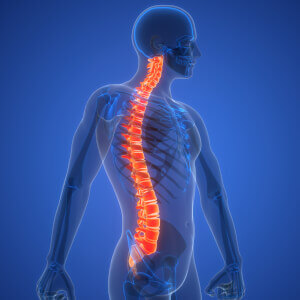
In this 84-minute master practicum created exclusively for The Shift Network, you’ll gain an understanding of fundamental somatic movement principles and how to apply them in everyday life, as you’re guided to unwind trauma to balance and regulate your nervous system. You’ll learn a simple, gentle practice for grounding, nourishing, and revitalizing your back body and mind (soma) as you ignite somatic awareness of the spine — unwinding tension to achieve natural postural alignment that frees you from pain. This master practicum is designed to engage both new somatic explorers and experienced somatic connoisseurs.

Resourcing the Pelvis
Movement Lesson Video With Maya Gayatri Andersson, MSME, MSMT
In this 31-minute video, Maya guides you in a gentle practice to free the pelvis by releasing muscular tension and optimizing its function. This lesson, which increases possibilities for movement, can help you achieve freedom of the hips, pelvis, lower back, and pelvic floor. Through slow mindful movements, these areas — fundamental for feeling secure and trusting in the world — are awakened.
What Students Are Saying About Brian Siddhartha Ingle, ND, DO, and Maya Gayatri Andersson, MSME, MSMT...
Clinical Living Somatics Educator and equine practitioner, St. Petersburg, Russia
Yoga teacher, Living Somatics Movement Teacher, and English communications consultant, Uppsala, Sweden
Clinical Living Somatics Educator, physiotherapist, and rehabilitation specialist, Kiev, Ukraine
Yoga and meditation teacher, music and arts teacher, and Living Somatics Movement Teacher, Germany
Massage therapist, aromatherapy consultant, and Clinical Living Somatics Educator in training, Riga, Latvia
An Unprecedented Opportunity to Join this Live Online Training
We feel honored that Brian Siddhartha Ingle and Maya Gayatri Andersson have chosen to partner with The Shift Network to offer this exclusive LIVE online training. This is a unique opportunity to interact directly with the co-founders of Living Somatics whose powerful insights and pioneering work are helping us heal and awaken ourselves and our world.
If you’re ready to take the next step in your own evolution, click the register button below to reserve your space now.
It’s not too late to join the Journey!
While the original enrollment deadline has passed, you’re still welcome to join us with a few important notes:
- Non-Refundable: All sales are final.
- Course Access: You’ll get instant access to all past modules and course materials.
- Catch Up First: Please review previous sessions before asking questions, as they may have been addressed.
- Live Class Replays: Miss a live session? Replays will be available within 48 hours.
Your Satisfaction Is 100% Guaranteed!

Your satisfaction is 100% guaranteed! If you don’t absolutely LOVE The Living Somatics Training — or don’t feel that it meets your needs — please submit your refund request form on or before May 5, 2026 and we’ll happily issue qualifying customers a refund.
More Praise for Brian Siddhartha Ingle, ND, DO, and Maya Gayatri Andersson, MSME, MSMT...
Yoga teacher and Living Somatics Movement Teacher, Dublin, Ireland
Doctor and Clinical Living Somatics Educator in training, Belarus
Living Somatics Movement Teacher and yoga teacher, Czech Republic
Holistic therapist and teacher, Ireland
Physiotherapist, India
Frequently Asked Questions
What’s a virtual program?
Can I still benefit from the program if I miss the live classes?
Can you tell me about the private online community group?
Are there scholarships available for this training?
What is your refund policy?
How can I reach Customer Support?
Join the Global Community

The Living Somatics Training offers some of the most advanced online teachings available within a thriving global community of learning and practice.
Join fellow students and practitioners to support and inspire each other as you integrate the teachings and practices Brian and Maya will share in this powerful program.
You’ll join an international community on the leading edge of manifesting a world grounded in the principles of cooperation, harmony, and reverence for all of life.