
Alexander John Shaia
Make your holiday season sacred again and experience deeper connection, meaning, and merriment through the long-lost tradition of Christmas — told through the melding of vibrant Celtic and Christian sacred stories.
Hear the ancient Celtic Christmas Story told anew and connect with Spirit and the Earth in a deeper way to revitalize and inspire your life during the dark season — and every day after.
The time of year when darkness descends on the Northern Hemisphere has long been a sacred time for families, communities, and religions.
It is a time to renew our deeper sacred commitments, refresh our deepest relationships, and keep the holy at the center of our lives.
The Winter Solstice marks the darkest time of the year... and the birth of new radiance.
The Celts called this new radiance the Golden Child, forged within a transitional threshold of time that connects us ever deeper to our ancestors and the merging of polarities — light and dark, spirit and earth, and unity of the Sacred Feminine and Masculine.
With an understanding of these Celtic rituals, Christians perceived this newfound light as Jesus the Christos, born anew from the deepest dark, like the sun at the Winter Solstice.
By understanding how the ancient Celtic 13-Day Winter Solstice Festival influenced and connects to current Christmas traditions, we have the opportunity to unify both mythologies...
... and re-enrich the holiday season through an array of Earth-centered rituals, symbolism, mystical merriment, and traditions that will deepen your appreciation of the Winter Solstice and Jesus as an inclusive universal reality.
To illuminate the deeper currents of how these historical traditions weave together into a richer spiritual tapestry, there is no better guide than Alexander John Shaia, PhD, devout Christian and teacher of mystical spirituality. During his 7-module program, you’ll be immersed in the true story of Christmas as you journey through the 13 Days of the Celtic Winter Solstice Festival, which became the 13 Days of Christmas.
Ultimately, you’ll learn long-lost practices and rituals for celebrating Christmas and the Winter Solstice in a deeper way — and reconnecting with the sanctity, joy, and awe of the holiday season and carrying it forward into the New Year.
Interweaving anthropology, Jungian psychology, mythology, and spirituality with incredible historical insight and vivid storytelling, Alexander John will share the mesmerizing story of how the Celts completely reshaped Christianity.
You’ll begin by exploring the Celtic Festival through the sacred physical intimacy of generosity and generativity — and how each day highlighted another aspect of these practices...
... including where the Sacred Feminine and Sacred Masculine intersect with Celtic mythologies and Christianity to form some of our most beloved modern-day holiday traditions — and a path to the harmony and peace that exists within wholeness.
You’ll be guided through sensory-based meditations that help you cultivate the dark season as a womb for hope and transformation... animating the holy dark without and within, embodying the experience of Christmas morning, and more...
... and gain a deeper connection with the Earth, the seasons, and the Great Tree — and how the Celtic tree reshaped Christianity’s use and imagery, including the shape of the cross.
You’ll learn the first uses of mistletoe, how and why the Magi suddenly appeared in sacred texts, and the original meaning of widely celebrated (and now commercialized) Mardi Gras.
Are you ready to make your holiday season sacred again? To revitalize and inspire your life during Christmas and every day thereafter by connecting with Spirit and the Earth in a meaningful way?
Join Alexander John on this immersive journey and make this holiday season your most sacred, enjoyable, and fulfilling yet through the Celtic 13-Day Winter Solstice Festival.
During this experiential course, you’ll:
- Learn about the Celt’s 13-Day Winter Solstice Festival — and how it’s the source of the 13 Days of Christmas — and what it means to us
- Explore the number 13 with its connection to motherhood and birth
- Develop simple rituals to greet November and December, decorate the dark, bring a tree into your home to use between Solstice Night and Christmas Night, and more
- Appreciate the Great Tree as a joining of the Sacred Feminine and Masculine — the harmony of unity and wholeness that we all aspire to
- Be guided through meditations to find your sacred soil, animate the holy dark without and within, embody the experience of Christmas morning, and more
- Connect with the Aramaic understanding of one ever-present, on-going eternal breath — known as the Messiah or the Christos (The Christ)
- Perceive the flow of nature’s seasons as a map of personal transformation
- Gain a deeper understanding of the cosmic interplay of dark and light
- Learn how the 13th day of the Solstice/Christmas Festival is also the 1st day of Carnival or Mardi Gras
- Look ahead to the opening of Celtic Spring — and explore simple practices for the Feasts of Brigid & Candlemas on February 2nd
What You’ll Discover in These 7 Modules
In this 7-part transformational intensive, Alexander John will guide you through the fundamental skills and competencies you’ll need to make your holiday season sacred again and experience deeper connection, meaning, and merriment through the long-lost story of Christmas.
This course will feature step-by-step teachings and experiential practices with Alexander John. Each session will build harmoniously upon the previous ones, so you’ll develop a complete holistic understanding of the practices, tools, and principles you’ll need to make your holiday season sacred again and experience deeper connection, meaning, and merriment through the long-lost story of Christmas.
Module 1 Learn the True Story of Christmas to Reconnect With Mother Earth & Harmonize Your Own Inner Seasons
Hear the ancient Celtic Christmas Story told anew to help you live a more vital, inspired life in the midst of dark days.
Interweaving anthropology, Jungian psychology, mythology, and spirituality, Alexander John will share the long-lost picture of how the Celts completely reshaped Christianity.
One of the most cherished pieces of that reshaping is the 13 Days of Christmas. Thirteen was the number of the Celtic Winter Solstice Festival in honor of the Great Mother and the mysteries of birth, including that of the sun.
This module, you’ll explore the festival’s two core values: generosity and generativity... and how the Celt’s Winter Solstice Festival evolved into the 13 Days of Christmas.
During the opening session, you’ll:
- Learn about the Celt’s 13-Day Winter Solstice Festival — and how it’s the source of the 13 Days of Christmas
- Discover how the Celts reshaped Christianity’s moon-based calendar into a solar calendar
- Explore the number 13 with its connection to motherhood and birth
- Perceive the flow of nature’s seasons as a map of transformation
- Develop simple rituals to greet November and December
- Be guided through a meditation to find your sacred soil — and walk from Autumn to the opening of Winter
Module 2 Hallow the Dark
This module, you’ll explore Celtic practices for November and December — and how those practices created Christianity’s Season of Advent.
The Celts — and the Christians who first met the Celtic world — hallowed darkness as the womb (mother) of new beginnings. In those days, both traditions honored the cosmic holy interplay of dark and light.
And both perceived the time of November/December (Northern Hemisphere) as the holy dark... a womb time where darkness serves as a birth chamber for fresh radiance.
As a result, early Celtic Christianity crafted Advent as a time of preparation for our inner womb. .. where we participated with the Earth as a Dark Madonna — a place from which fresh radiance will be born.
For Christians, Mary is the Dark Madonna, and The Christos is that fresh radiance.
This module, you’ll:
- Gain a deeper understanding of the cosmic interplay of dark and light
- Explore the dark as the womb (mother place) of new beginnings
- Discover how the Celts and Christians hallowed winter, nighttime — and the dark season
- Develop simple rituals to decorate the dark
- Be guided through a meditation to animate the holy dark without and within
Module 3 Unite the Sacred Feminine

Lighting a Great Tree is one of the world’s most endearing rituals of wonder and awe. This week, you’ll explore the ritual’s origins and its significance for the ancient Celts. ..
... and discover how the tree’s importance in the Celtic world reshaped Christianity’s use and imagery, including the cross.
You’ll also explore why the tree became a central symbol in the Celtic dark season. .. and why early Celtic Christians incorporated it into their practice.
As you learn about the Great Tree, you’ll come to appreciate its symbolism as an invitation to unite seemingly opposite and contrary meanings...
... and connect with the Aramaic understanding of one ever-present, on-going eternal breath — known as the Messiah or the Christos (The Christ).
During the third week of class, you’ll:
- Appreciate the Great Tree as a joining of the Sacred Feminine and Masculine — the harmony of unity and wholeness that we all aspire to
- Understand the role and experience of The Oak as The Celtic Great Tree
- Explore simple rituals to use when bringing a tree into your home and life
Module 4 Celebrate Jesus as a Timeless Universal Reality to Ease Isolation & Amplify the Radiance of Christmas Day
The Winter Solstice is essential to the Feast of Christmas.
What did the early Christians discover in the Celtic world about the Solstice? Why did the Solstice and Christmas become separated by three days centuries later?
You’ll explore these questions and more this week, including how this separation has led to a horrendous misunderstanding with tragic consequences for Christian spiritual practice.
For Christians, this rejoining of Solstice and Christmas will help us appreciate Jesus as an inclusive universal reality.
You’ll also learn practices for the Winter Solstice through the first day of Christmas — including sunset on December 24, in the night, at dawn, and finally... in the daylight of Christmas morning.
During the fourth class, you’ll:
- Learn the meaning of the word solstice and its significance to the separation of Christmas by 3 days
- Understand the inherent connection between Solstice and Christmas
- Observe the stillness from the night of Solstice to the night of Christmas
- Appreciate the practice of 3 nights/3 days between the Winter Solstice and the Feast of Christmas
- Discover practices and rituals to use between Solstice Night and Christmas Night — adding deeper meaning and connection to your holiday season
- Be guided through a profound embodied experience of Christmas morning
Module 5 Explore the Feasts & Rituals of Wrens, Wine & Fools to Find Hope in the Mystery of Birth

The Celtic Festival was about the practice of generosity and generativity — each day of the festival highlighted another aspect of these practices.
This week, you’ll explore the 2nd through 6th day of Christmas — the Celts’ celebration and the Christian translation of the day into its own story and practice.
For instance, the 2nd day of the Celtic Festival is in honor of the Sacred Masculine. It was a day when men and boys were to sacrifice a wren. The Christian Festival kept to the story of the Sacred Masculine and made this the feast of Stephen, the first Christian martyr.
You’ll discover how the Celtic and Christian days are in honor of the same principle but different stories... and come to appreciate the deeper meaning of these practices for men and boys.
Celtic and Christian stories also honor generosity and generativity on the 3rd through 6th days of the festival... you’ll explore them as well.
This week, you’ll:
- Learn why the 2nd day honors the Sacred Masculine — and the rituals that were practiced
- Discover how the Christian Festival kept to the story of the Sacred Masculine — and made this the feast of Stephen, the first Christian martyr
- Understand how each feast and ritual honors generosity and generativity — and shares an aspect of life and the mystery of birth
- Discover simple spiritual practices that will instill hope and help you recreate the original Celtic Festival
Module 6 Bless & Protect Your New Year With Mistletoe, Wassail & Grumbling
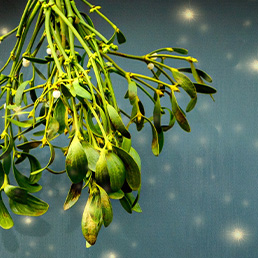
There was a time when mistletoe was considered an herb with healing and protective properties.
As a result, it was only to be harvested by a spiritual elder (a shaman or druid priest) who would then provide each home with a branch. The members of the household would take the branch to each room, asking that its mystical properties cleanse the house from any ill spirit found there. Finally, the mistletoe was hung over the front door as a talisman to protect the house and block any dark spirit from entering.
The Christian story of this day involves blessing each room of your home with sacred baptismal water. This sacred water — blessed by a priest — offers a home a spiritual cleansing, as well as a protective prayer for all over the coming year.
This week, you’ll continue your walk through the 13 Days exploring the stories and aspects of birth celebrated on the 7th through 11th days of the festival.
The 7th day of the festival corresponds to today’s 31st of December — the last day of the civil year. While we think of mistletoe as something to be hung before Christmas Day, for the Celts, it was hung on this the 7th day of the festival.
This week, you’ll:
- Explore the sacred symbolism and mystical properties of mistletoe
- Learn rituals for blessing each room of your house — and cleansing your home of evil spirits
- Hang mistletoe over your front door as a talisman to protect the house and block any dark spirit from entering
Module 7 Celebrate the Mysticism of Mardi Gras With Spiritual Practices to Manifest Radiance
The final day of the Celtic and Christian Festival is now January 6th — the 13th Day.
For the Celts, this day celebrated the growing radiance that was first noticed just past the Solstice. Now what was almost imperceptible to the naked eye has become easily seen, felt, and robust.
During the final week of class, you’ll learn how the Christian lore of this day has become muddled over the centuries. .. as Chrisitans have used three gospel stories to speak of radiance becoming manifest.
One of those three stories is the arrival of the Magi. Unfortunately, that story has overtaken the meaning of the feast and is now seen as a literal historical event on this date.
The other two Christian passages for this feast (known as the Epiphany) are Jesus coming up from the waters of a mikvah bath (jewish baptism) and the wedding feast at Cana.
You’ll explore all three passages, with a focus on the mystical marriage at Cana and its full impact on the 13th and final day of the festival. Alexander John will also share how the 13th Day is “omega and alpha.”
This day closes the Festival of Christmas and simultaneously opens the Festival of Mardi Gras or Carnival that extends from the 6th of January until the opening of Lent.
In this session, you’ll:
- Explore the true origins of the story of the Magi and the mystical marriage at Cana — and how these stories evolved in Christianity
- Discover simple spiritual practices to close the festival
- Learn why Alexander John calls the 13th Day of the Solstice/Christmas Festival “omega and alpha”
- Look ahead to the opening of Celtic Spring — and discover simple practices for the Feasts of Brigid & Candlemas on February 2nd
SPECIAL BONUS OFFER
In addition to Alexander John’s transformative 7-module course, you’ll receive this special bonus offering to complement the course and take your understanding and practice to an even deeper level.

Celebrate Your Royal Nature: From the 13th Day to the Opening of Celtic Springtime
Video Dialogue Between Alexander John and Glenn Siepert
The 13th Day for Christians (and for many European cultures) is also the first day of Carnival or Mardi Gras. This video dialogue looks at the meaning and practices of these royal festivities, offering suggestions for how you might celebrate the Jan/Feb days in your home and community.
What People Are Saying About Alexander John Shaia…
Speaker and bestselling author
New York Times bestselling author
Placencia, Belize
Gastonia, North Carolina
Los Angeles, California
Hagerstown, Maryland
Here’s What You’ll Receive

Seven 90-Minute Class Sessions With Alexander John Shaia, PhD
Experience a unique opportunity to learn from Alexander John Shaia, PhD, founder and director of Quadratos: Four Paths, One Journey — from the comfort of your own home. Each class session includes a streaming video option and guides you on how to make your holiday season sacred again and experience deeper connection, meaning, and merriment through the long-lost story of Christmas.

Seven Transcripts of Class Sessions
In addition to the high-quality videos and MP3 audios, you’ll also receive the entire class transcription after each session is completed. You can then review, print, and highlight the most important insights and practices you were given.

Exercises and Questions for Each Lesson
Between class sessions, you’ll have the option of completing related exercises, practicing new tools, and answering questions to accelerate your learning and integrate each lesson.
An Unprecedented Opportunity to Join the Online Course, Sanctify Your Holiday Season
We feel honored that Alexander John Shaia, PhD has chosen to partner with The Shift Network to offer this exclusive online training. This is a unique opportunity to learn from the founder and director of Quadratos: Four Paths, One Journey, whose powerful insights and pioneering work are helping us heal and awaken ourselves and our world.
If you’re serious about making your holiday season sacred again and experiencing deeper connection, meaning, and merriment through the long-lost story of Christmas, then you owe it to yourself, your loved ones, and our world to take this one-of-a-kind training.
Your Satisfaction Is 100% Guaranteed!

If you don’t absolutely LOVE Sanctify Your Holiday Season — or don’t feel that it meets your needs — please submit your refund request form 14 days from your date of purchase and we’ll happily issue qualifying customers a refund.
More Praise for Alexander John Shaia
Jungian analyst, Christchurch, New Zealand
Spiritual director, St. Helena, California
Perth, Australia
Australia
Washington
About Alexander John Shaia
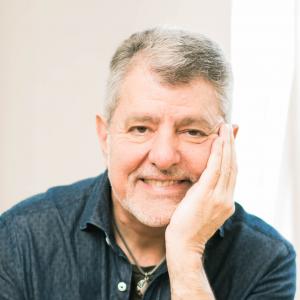
Born and raised in Birmingham, Alabama, Alexander John Shaia was part of a large extended family that had emigrated from Lebanon a generation previously. He grew up immersed in the ancient traditions of an Aramaic, Middle Eastern Christianity (Maronite Catholicism) and was expected to become a priest, a family tradition since the year 1300. He was led otherwise.
Alexander John received a degree in Cultural Anthropology from the University of Notre Dame where he was privileged to learn from Joseph Campbell. Next came a brief time in seminary followed by a master’s in Counseling Education, a master’s in Religious Education, a graduate certificate in Pastoral Psychotherapy, and a PhD in Clinical Psychology.
His extensive psychological and spiritual training across many modalities finally led him to Switzerland where he studied with Dora Maria Kalff, a Jungian analyst and founder of Sandplay Psychotherapy. He then became the first U.S. man admitted to the International Society for Sandplay Therapy — and continues to serve as a senior Certified Teaching Member of both the U.S. and International organizations.
Integrating a lifelong practice of prayer with many cross-disciplines — anthropology, psychology, spirituality, and ritual work, along with being a proud gay man — has shaped him into a unique thought leader, prolific author, and widely sought-after trainer, and speaker.
In 2001, he founded Quadratos — an educational organization to teach the ancient and universal four-path journey for radical transformation — and the four Christian gospels as an exemplar of the four paths.