
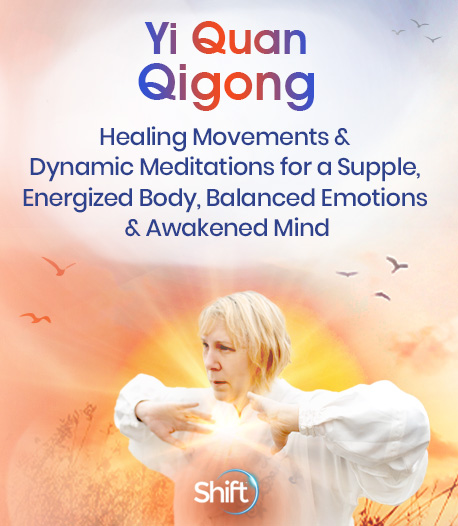
Ken Cohen
Explore the perfect healing martial art for beginners and long-time practitioners alike, who value the flowing movement, energy, and poses of traditional Chinese styles in Qigong and Tai Chi — with an emphasis on ease, grace, simplicity, and a mature spiritual perspective.
Are you ready to devote time to preserve the health of your joints, improve your balance and coordination, refine and deepen your breathing, mobilize hidden resources of strength, and release self-harming habits and patterns that no longer serve you?
Have you contemplated the transformational possibilities available to you within the Chinese wisdom lineage — and are prepared to take a deeper dive into the powerful healing and enlightening practices available to you there?
Yi Quan (say YEE-CHUEN) consists of brief, easy-to-learn postures, exercises, and meditations that improve skills used in Tai Chi, Qigong, sports, and everyday life. Like Tai Chi, Yi Quan is both a healing art and a vocabulary of martial arts skills.
But unlike Tai Chi, it does not require learning a long and complex choreography. Rather, the founder of Yi Quan, Master Wang Xiangzhai, took a radical approach to healing, body energy management, and athletic training by asking a simple question:
“What is the quickest and most direct way to help people realize their innate potential, without imposing a ‘system,’ a new form of conditioning that might limit awareness and expression?”
The beautiful Yi Quan movements provide a complete wellness workout. Yi Quan is ideal for beginners and all levels, as it does not require previous experience in the healing arts or Chinese medicine.
However, body training is only half the answer. Yi Quan includes sophisticated methods of healing imagery to cultivate mental focus, relaxation, inner peace, and your connection with nature.
Ken Cohen is a Tai Chi and Qigong Grandmaster, and a winner of a Lifetime Achievement Award in Energy Medicine, who has practiced Chinese healing and contemplative and martial arts since 1968. He is one of the most significant teachers of the mystical underpinnings of Chinese culture in our generation — particularly because he’s known for his friendly and engaging teaching style, making ancient healing arts easy to understand and a joy to practice.
Ken received his training in Yi Quan directly from a student of the founder, Master Wang Xiangzhai (1885-1963), as well as from other second- and third-generation students.
While they’re practice-oriented, these principles will also be delightfully explored through anecdotes of the old masters. If you prefer learning with a touch of fun, embark on Kens course, in which he shared this original and rare system with wit and wisdom — using a blend of story, Qigong insights, and standing meditation exercises to refine your posture, align your breathing patterns, and replenish your energy reserves.

During this experiential course, you’ll:
- Learn how Yi Quan mixes meditation, martial arts, and exercise in a series of simple motions based on ancient shapes and animal shapes
- Experience a guided standing practice — understanding the elements of properly aligned posture, distributed weight, balanced breathing, and relaxed (slightly bent) joints — to feel rejuvenated and activated
- Explore the 5 Standing Meditation Postures of Yi Quan — how mindfulness and correct posture awaken your Qi (life force)
- Practice 5 methods of Yi Quan Walking Meditation — precise methods to improve balance and coordination
- Experience meditations that deepen your practice and increase healing benefits
- Receive Yi Quan Dewdrop Healing Imagery for stress reduction, detoxification, and energy renewal
- Understand “Spiraling Power” — and how spiraling movements dissolve tension
- Explore how Yi Quan can improve skills in any movement activity: golf, basketball, baseball, running, swimming, martial arts/self-defense, and others
- Integrate animal movement practices that cultivate the strength of the bear, the power of the tiger, and the longevity of the tortoise
- Discover the 6-Direction Force — how to expand consciousness to include not only what’s in front of your eyes, but the space behind you, to your right and left, and above and below you
- Receive Ken’s translations and insights into the writings of the founder of Yi Quan — and how to apply this information to deepen your practice
- Explore specific and precise Yi Quan practices — refined by generations of masters to produce maximum and quick benefits for body, mind, and spirit
- Discover how to create your own improvised Yi Quan Health Dance
What You’ll Discover in These 7 Modules
In this 7-part energy-work intensive, Ken guides you through the fundamental skills you’ll need to embark on a path toward mastering the perfect martial art for practitioners who value the flowing movement, energy, and poses of Qigong and Tai Chi — with an emphasis on ease, grace, simplicity, and a mature spiritual perspective.
The Beauty of On-Demand
This course features step-by-step teachings and experiential practices from Ken. Each session builds harmoniously upon the previous ones, so you’ll develop a complete holistic understanding of the practices and principles you’ll need to cultivate vital energy, deepen your flexibility, improve your balance, and increase your strength — for longevity, wellness, and an awakened mind. Your purchase includes 24/7 ongoing access to your course content, allowing you time to review the materials at your own pace and integration.
Module 1 Introducing Yi Quan
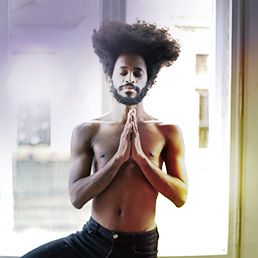
Discover the key elements of Yi Quan posture, including simple ways to relax more deeply, the importance of bent knees to put spring in your step, how to release constriction in your spine, and the role of your abdomen in deep breathing.
Practice five standing meditation postures to improve alignment and build a reservoir of strong, resilient Qi. Close the standing meditation by practicing Xiu Xi Shi, the Posture of Relaxation: a specific way of shifting your weight, which gently massages your feet.
Then, learn the first of five Yi Quan methods of meditative walking and how it can reduce stress and add joy to your everyday life. The founder of Yi Quan said that it “... awakens the mind of the ancient Buddhas ” — a realm of emptiness, free of thought and worry.
Ken will teach each technique slowly, carefully, and with plenty of time for review.
In this session, you’ll:
- Explore the 5 Standing Meditation Postures of Yi Quan — how mindfulness and correct posture awaken your Qi (life force)
- Practice the Yi Quan Walking Meditation — a precise method to improve balance
- Learn how to relax deeply by “sinking” through your feet into the ground, like a tree with deep roots
- Explore ways to preserve the health of your joints and create more ease in movement
- Practice holding a stress-free, aligned posture — with insight into correct weight distribution, how to release your shoulders, the position of your lower back and hips, and much more
- Discover how to breathe more deeply, so healing energy reaches every cell
Module 2 Don’t Just Do Something, Stand There! Understanding Power Comes From Stillness

Standing Meditation is considered one of the Si De — the Four Virtues of the Human Being, which are Lying, Sitting, Standing, and Walking. One of the goals of Qigong is doing these most basic, everyday activities with ease, grace, and enjoyment. Movement starts from the stillness and tranquility of standing. If you can’t stand properly, you can’t move properly.
You will review the five core postures of Yi Quan Standing, and deepen your practice with Yi Quan traditional guided imagery meditations. Then, proceed smoothly from Standing to Movement — maintaining a quiet center in the midst of activity.
Imagine if you can learn to do this when life seems chaotic!
In this session, you’ll:
- Explore the “Paradoxical Characteristics” (Maodun Te Dian ) — how to be supple but strong, sunk in the ground and supported by it, rooted like a mountain yet light as a feather, aware of yourself and the universe
- Discover how stillness creates movement
- Understand how movement transforms consciousness and trains the brain
- Experience meditations that deepen your practice and increase healing benefits
- Practice 3 methods of Yi Quan Walking Meditation
- Receive Yi Quan Dewdrop Healing Imagery for stress reduction, detoxification, and energy renewal
Module 3 Coiling Silk
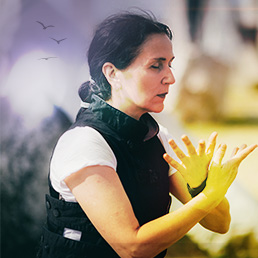
Outward energetic and inner alchemical synergies begin to stir as you combine standing postures with healing imagery for deeper relaxation, mental silence (stilling the “monkey mind”), and opening your senses to the healing power of nature...
... while also reviewing and moving through Walking Meditations 1, 2, and 3 — and integrating a fourth called Luo Xuan Jin (Spiraling Power). This fourth technique winds and turns like the spinning of a silk cocoon — and is thus also known as Coiling Silk.
By practicing Coiling Silk, your tension dissolves and energy knots unwind — adding depth and enjoyment while increasing the health benefits of your practice.
In this session, you’ll:
- Receive Yi Quan traditional healing imagery for relaxation, mental silence, and a deeper connection to the Qi of nature
- Understand Spiraling Power — and how spiraling movements dissolve tension
- Experience new ways to deepen body awareness and improve coordination
- Explore how Yi Quan can improve skills in any movement activity: golf, basketball, baseball, running, swimming, martial arts/self-defense, and others
- Begin the next stage in your journey with animal movement practices that cultivate the strength of the bear, the power of the tiger, and the longevity of the tortoise
Module 4 The Essence of Music Is One Note

Move from what the Chinese call “the skin” (superficial learning) to “the bones” (deep learning), discovering the hidden dimensions and delights of Yi Quan with an exploration of Liu Mian Li (6-Direction Force) — sensing the space around your body and becoming aware of the field of Qi that we live in.
You’ll enjoy Dragon Standing and Eagle Standing practices to open your joints, increase your reserve of vitality, and soar to new heights of consciousness. Then, Ken will lead you in the final core Walking Meditation, practiced slowly as a moving meditation or quickly for aerobic conditioning.
You’ll also learn about the deep connection between Yi Quan and China’s favorite sport: the martial arts (wu shu ) — at the highest level of martial arts, the ego is defeated and you discover the spiritual warrior within. The class will close with a discussion of Yi Quan principles, based on writings of the founder, Wang Xiangzhai.
In this session, you’ll:
- Discover the 6-Direction Force — how to expand consciousness to include not only what’s in front of your eyes, but the space behind you, to your right and left, and above and below you
- Explore the dynamic power of Dragon and Eagle Standing Meditations
- Experience all 5 core methods of Yi Quan Walking Meditation
- Learn a new way to conserve energy by simply changing the shape of your hands as you practice
- Receive Ken’s translations and insights into the writings of the founder of Yi Quan — and how to apply this information to deepen your practice
Module 5 Be the River
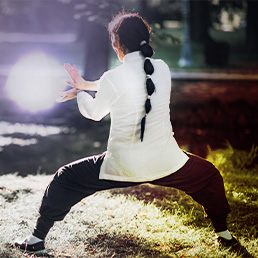
In the fifth century BCE, Lao Zi, the founder of Taoism, declared, “The highest good is like water.” Water is supple and adaptable, assuming the shape of its container. It is responsive — notice how even a gentle breeze produces ripples on a quiet pond. Yet water is also a source of great strength, for when supple power is concentrated, it becomes a mighty wave in the sea.
In this module, you’ll learn to flow gracefully as though swimming in the air. Then for contrast, you’ll discover how Yi Quan helps you develop core strength through a principle called Zheng Li (Contending Force), in which you imagine moving against resistance, as though the air has become as thick as molasses.
Our bodies are made mostly of water. Is it any wonder that water-like movements restore our innate and most natural potentials and abilities ? As Master Wang Xiangzhai, founder of Yi Quan, said, “The ordinary is the extraordinary.”
In this session, you’ll:
- Discover how your body can develop water-like qualities of suppleness, adaptability, and strength
- Explore how to dissolve dams of tension that block the flow of Qi
- Experience Yi Quan techniques that dramatically improve core power
- Learn the 3-Direction Standing Meditation to increase upper body and hand strength
- Develop a skill called Zheng Li (Contending Force) that integrates form, movement, and imagery to improve posture and vitality
Module 6 Connectedness
Is it possible to move and sense as a whole human being, rather than fragmented, in bits and pieces? To what extent is health a state of connection — and disease one of disconnection?
Yi Quan includes brilliant ways to restore broken or fragmented connections — so that the upper body communicates with the lower body, right side with left side, inner nature with outer nature. As we review Yi Quan methods, we’ll explore this principle of connectedness and Whole-Body Internal Force.
Ken will then speak about how Master Wang Xiangzhai was a close friend of some of China’s great artists — and that Chinese arts such as painting and poetry are based on principles similar to Qigong. He’ll introduce you to this broader cultural context of Yi Quan by reciting original translations of 1,000-year-old Chinese poems that celebrate the beauty of the natural world.
In this session, you’ll:
- Have received a complete Yi Quan wellness workout
- Understand how to feel whole and integrated, with every part of your body harmoniously connected to every other part
- Discover why Qigong is sometimes defined as Shang Xia, Nei Wai, He Yi — “upper and lower body, inside and outside harmonized as one”
- Develop an appreciation for Yi Quan’s roots in traditional Chinese culture as Ken recites 1,000-year-old Chinese poems in Chinese and English
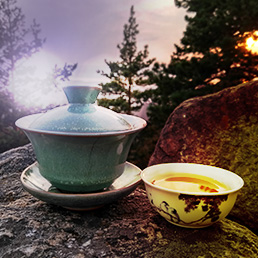
- Learn how Chinese arts — such as music, painting, calligraphy, and tea ceremony — express Qi
Module 7 The Health Dance

Yi Quan is based on a balance of form and formlessness — specific exercises to improve posture and movement skills and cultivate a state of being free of limitation in a formless realm without thoughts, images, or worries.
In this class, you’ll review the core wellness workout and many of the auxiliary exercises and meditations. Then Ken will share a fascinating story of how Master Wang developed a new, creative approach to personal training called Jian Wu (the Health Dance).
Ken will demonstrate and lead you in a spontaneous way of combining techniques from the Yi Quan repertoire into a completely unique, improvised dance, and then give you pointers on how you can create your own health dance. The health dance may be tailored to individual needs and can range from slow and meditative techniques to moderate or full-speed movements for conditioning and stamina.
In this session, you’ll:
- Explore specific and precise Yi Quan practices — refined by generations of masters to produce maximum and quick benefits for body, mind, and spirit
- Discover how to create your own improvised Yi Quan Health Dance in which the principles are followed, but you are free to create your own postures, movements, and sequences
- Learn the fascinating story of how the Health Dance was created and its relationship with the movements of the Crane and ancient Chinese rock art
- Receive wisdom from the 94-year-old “Brother of Silence” and his 4 secrets to longevity
- Begin the rest of your lifelong Yi Quan journey!
SPECIAL BONUS OFFER
In addition to Ken’s transformative 7-module course, you’ll receive this special bonus offering to complement the course and take your understanding and practice to an even deeper level.
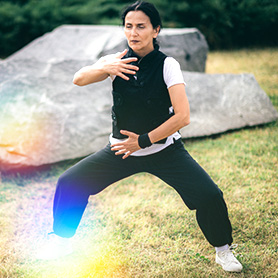
Yi Quan: The Mindfulness-Based (Yi) Healing & Martial Art (Quan)
PDF Translation & Commentary by Ken Cohen
Read Ken Cohen’s original translation and commentary on the biography of Master Wang Xiangzhai, founder of Yi Quan, and inspiring quotes from Wang’s writings. You’ll explore insightful reflections on Yi Quan’s comprehensive approach to somatic education, martial arts, and spiritual development. Also included is an outline of techniques that will be explored in the course and a list of resources for further study.
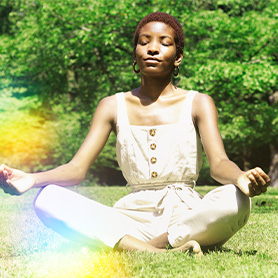
Yi Quan Healing Imagery
Audio Meditations From Ken Cohen
Be guided through powerful meditations developed by Yi Quan founder Master Wang Xiangzhai — to help you cleanse and refresh your body and mind. Learn the Dew Drop Shower Meditation to wash away stagnation, the Autumn Leaf Meditation to still the monkey mind, and the Rings of Power Meditation to harmonize with the Qi of the universe. Wang believed that these unique methods of mental focus were essential to understanding and expressing the full potential of the human spirit.

In the Company of Cranes: Ancient Teachers of Qigong
PDF Essay by Ken Cohen
Discover why the crane is such an important symbol of balance, meditation, and longevity — and how it inspired Chinese art, poetry, martial arts, and Qigong. This essay includes original translations and detailed instruction in Crane Breathing, a Taoist Qigong technique that deepens the breath, cultivating resilience and tranquility. Crane Breathing is one of the most famous, yet rarely taught, Taoist meditations for increasing your body’s supply of Qi in your primary energy reservoir.
The Chinese Art of Tea
Video Teaching From Ken Cohen
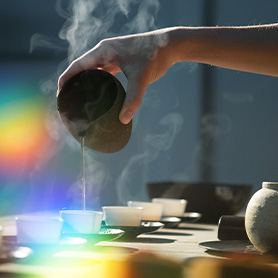
“The ordinary is the extraordinary,” said the founder of Yi Quan. One of the finest examples of this principle is the Chinese art of tea, not so much a ceremony as an elegant way to open the senses and enjoy the aroma, taste, and Qi of tea. Beauty and enlightenment are found in the ordinary and the everyday. Tea transports you to tranquil pine forests and misty mountain vistas. Drinking tea is Qigong! Join Ken in his tearoom as he shares tea preparation and appreciation with you.
What People Are Saying About Ken Cohen…
Here’s What You’ll Receive

Seven Pre-Recorded 90-Minute Modules
Experience a unique opportunity to learn from Qigong and Tai Chi grandmaster Ken Cohen, world-renowned health educator and China scholar, from the comfort of your own home. Each session includes a streaming video and guides you to explore the perfect martial art for beginners and long-term practitioners alike.

Seven Transcripts of Sessions
In addition to the high-quality videos and MP3 audios, you’ll also receive session transcriptions. You can then review, print, and highlight the most important insights and practices you were given.

Exercises and Questions for Each Lesson
Between sessions, you’ll have the option of completing related exercises, practicing new tools, and answering questions to accelerate your learning and integrate each lesson.
An Unprecedented Opportunity to Join the Online Course, Yi Quan Qigong
We feel honored that Ken Cohen has chosen to partner with The Shift Network to offer this exclusive online training. This is a unique opportunity to learn from a world-renowned health educator, China scholar, and Qigong and Tai Chi Grandmaster whose powerful insights and pioneering work are helping us heal and awaken ourselves and our world.
If you’re serious about learning healing movements for a supple, energized body, balanced emotions, and an awakened mind, then you owe it to yourself to take this one-of-a-kind training.
Your Satisfaction Is 100% Guaranteed!

If you don’t absolutely LOVE Yi Quan Qigong — or don’t feel that it meets your needs — please submit your refund request form 14 days from your date of purchase and we’ll happily issue qualifying customers a refund.
More Praise for Ken Cohen
Aalborg, Denmark
East Patchogue, New York
Alexandria, Canada
About Ken Cohen
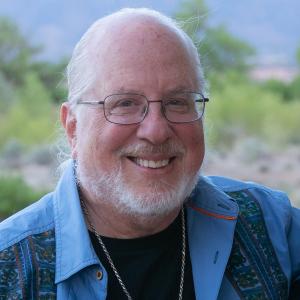
Kenneth S. Cohen (Gao Han), MA, is a world-renowned Tai Chi and Qigong Grandmaster with more than 50 years of experience. A former collaborator with Alan Watts, he’s the author of the internationally acclaimed book, The Way of Qigong, and more than 200 journal articles on spirituality and health. Ken received his teaching certificate from the William C. C. Chen School of Tai Chi Chuan in 1974 and continued training with B. P. Chan and Madame Gao Fu. He eventually became the apprentice of Taoist Abbot Huang Geng Shi (1910-1999), an acupuncturist, Qi healer, and martial artist from China’s sacred Xi Qiao Mountain.
A leader in the dialogue between ancient wisdom and modern science, Ken was one of the first to teach Qigong in North American medical schools. His sponsors have included the Mayo Clinic, the Menninger Institute, the American Cancer Society, and numerous cultural organizations. He is the recipient of the Alyce and Elmer Green Lifetime Achievement Award in Energy Medicine. Ken is known for his friendly and engaging teaching style, making ancient healing arts easy to understand and a joy to practice.