
Gary Kraftsow
Breathe life into your yoga practice by focusing on the key components that achieve the highest potential — breath-centric asana, movement, meditation, and flow — giving you more energy to control your mind, body, and spirit.
Does your yoga practice address the totality of who you are?
The Ancients understood the multidimensionality of the human system. They developed practices to help us identify and transform dysfunction and other sources of suffering, optimize our health and wellbeing, and achieve higher states of consciousness.
In order to get the full spectrum of benefits that yoga can provide, we must first understand our multidimensional nature and how to use the tools of practice to master it.
Whether you’re an intermediate or deep practitioner of yoga, one thing is clear: Your practice should relate to your multidimensional nature in order for you to experience better health, find deeper meaning and fulfillment, and open the infinite potential that’s inherently available to you.
In this powerfully transformative course from Gary Kraftsow, a yoga master and the founder and director of the American Viniyoga Institute, you’ll learn how to tap into your own innate healing power through the multidimensional practices of yoga that include āsana, prāṇāyāma, meditation, chanting, and working with the mystical symbol system of the cakra-s (or chakras) — providing a map revealing our highest challenges and greatest potential.
Gary's course will guide you through meditations that unlock the deeper dimensions of who you are, unmasking health vulnerabilities and offering tangible techniques for how to strengthen your mind, body, and spirit.
You’ll expand your practical use of āsana to develop, maintain, or regain structural alignment, strength, and stability, and to support optimal physiological functioning, balance your emotions, clarify your mind, and achieve spiritual fulfillment.
You’ll learn how to manage your autonomic nervous system and regulate sympathetic-parasympathetic responses with advanced breath-centric āsana and prāṇāyāma techniques, transform troubling emotions with Tantric Laya Yoga practices…
… and establish a conscious relationship with yourself and Source at each level of your being to adapt, calibrate, and apply integrative yoga practices to your own specific goals, needs, and interests.
You’ll identify the stage of life that you’re in as written by ancient practitioners — sunrise, midday, and sunset — and create a holistic yoga practice that meets you where you are on your journey.
You’ll merge all of this knowledge with mystical symbolism, chants, breathwork, and Tantric gestures to create an integrated path of wholeness and healing — and a new blueprint of what’s possible for your life.
As a pioneer of yoga therapy and an innovator in the transmission of yoga for health, healing, and personal transformation for more than 40 years, Gary teaches that yoga is a science of self-discovery and self-transformation that was designed to address the totality of who you are.
His practices approach yoga as a path to wholeness that can be easily adapted to your specific needs.
Are you ready to uplevel your yoga practice and free yourself from the obstacles that are obstructing your path to healthy, joyful living?
Embark on Gary's course to take your yoga practice to the next level through a science-based approach that is as multidimensional as you are.

During this experiential course, you’ll:
- Learn treatment paradigms used in yoga and yoga therapy to help you understand and manage your energy — and address chronic pain and conditions
- Discover the biomechanical nature of āsana-s — and how they help you develop, maintain, or regain skeletal alignment, joint stability, muscular strength and resilience, range of motion, balance, and more
- Manage your autonomic nervous system and regulate sympathetic-parasympathetic responses with advanced breath-centric āsana and prāṇāyāma techniques
- Learn how āsana-s can be adapted to the needs of your functional anatomy in order to eliminate, reduce, or manage problematic conditions
- Learn how to use the powerful symbolism of the cakra-s to connect with and transform your own dysfunctional patterns and achieve your greatest potential
- Master the multidimensionality of your own nature through the integrated use of mystical spiritual symbols, ancient wisdom, and modern science
- Establish a conscious relationship with yourself at each level of your being to adapt, calibrate, and apply integrative yoga practices to your own specific goals, needs, and desires
- Deepen your capacity for honest self-reflection and actualize your full potential through guided meditative practices
- Be immersed in ancient symbol systems that offer a map to help you understand and relieve suffering and achieve fulfillment
- Learn 2 important methods of practice in Tantric Laya Yoga for transforming troubling emotions
What You’ll Discover in These 7 Modules
In this 7-part transformational intensive, Gary guides you through the fundamental skills you’ll need to take your yoga practice to the next level by working to balance functional anatomy, energetic essence, emotions, and the stories you tell yourself — to set a meaningful direction for your future.
The Beauty of On-Demand
This course features step-by-step teachings and experiential practices from Gary. Each session builds harmoniously upon the previous ones, so you’ll develop a complete holistic understanding of the practices, tools, and principles you’ll need to take your yoga practice to the next level by balancing your functional anatomy, your energetic essence, and your troubling emotions — in order to set a meaningful direction for your future. Your purchase includes 24/7 ongoing access to your course content, allowing you time to review the materials at your own pace and integration.
Module 1 The Multidimensionality of the Human System

The Ancients recognized the multidimensional nature of the human system — structure, physiology, heart, mind, and spirit — how each dimension has its own unique functions, powers, and capabilities. Each also possesses its own unique challenges, problematic conditions, and potential for suffering.
The path of yoga has evolved specific practices to help reduce suffering, manage conditions, overcome challenges, increase power, and optimize capability in each dimension.
According to tradition, the starting point to achieve these goals is to establish a conscious relationship with yourself at each level and to adapt and apply the practices for your own specific needs.
During the opening week of class, you’ll explore the multidimensionality of the human system and the specific practices that were designed to support it.
This week, you’ll:
- Explore the multidimensional nature of the human system — your anatomy, physiology, heart, mind, and spirit — and how yoga intersects with these to meet you where you are on your journey
- Connect with the mystic symbolism of the cakra-s — a map that reveals your dysfunctional patterns and your greatest potential
- Begin to establish a conscious relationship with yourself at each level of your being to adapt and apply practices for your own specific needs
- Discover the science and spirituality of yoga as an integrated path to wholeness
- Experience a simple practice that integrates seated movements, breathing, chanting, and specialized Tantric gestures to deepen your connection with yourself at a multidimensional level
Module 2 Establishing Goals for Practice
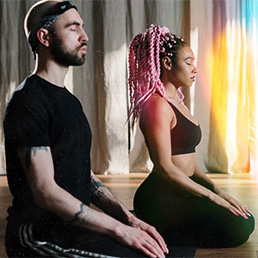
The Ancients taught that there are three primary stages of life — sunrise, midday, and sunset — each with its own unique needs and potential.
According to this perspective, understanding where you are in your life\'s journey is essential to creating an effective yoga practice.
This week, you’ll explore these stages in depth, as well as the goals the Ancients prescribed to yoga such as eliminating, reducing, or managing suffering, optimizing health and wellbeing, and finding fulfillment, meaning, and purpose in life.
Respecting the reality of change, the Ancients taught that your yoga practice must be adapted and calibrated to your needs and interests at whatever stage of life or state of being you’re in.
You’ll consider where you are this week by examining your needs, interests, priorities, and goals… and begin to craft a practice that meets you where you are on your journey.
This week, you’ll:
- Discover the original goals of yoga as outlined by the Ancients
- Explore where you are in the stages of life as observed by the Ancients — the multidimensional needs of your body and spirit and how to meet them for optimal wellbeing
- Learn how to adapt and calibrate your yoga practice to your specific goals, needs, and interests
- Experience a simple practice that includes a guided visualization, seated movements, breathing, and chanting to help you think clearly about your future
Module 3 Cultivating a Clear Mind

The Ancients taught that specific dysfunctional patterns (known as saṁskāra-s) at the level of thought, feeling, and behavior are obstacles to living a harmonious, joyful, and fulfilling life.
They developed the art and science of meditation to help us create new patterns that lead to fulfillment and freedom.
This week, you’ll learn effective steps in meditation to direct your mind without distraction and sustain that direction. This is known as Dhāraṇā.
The next step is to gain control of your desires, feelings, emotions, thoughts, choices, actions, and behavior.
These practices, known collectively as Dhyānam, will enable you to deepen your capacity for honest self-reflection, recognize how your saṁskāra-s influence your perception, and reframe how you see yourself, others, and the world around you, and work to actualize your potential.
You’ll also explore the symbol of the Sixth Cakra, the Ājñā Cakra, associated with your innate faculty of Intelligence — including your capacity to perceive, understand, and choose. The Ājñā Cakra is, symbolically, the part of you that balances your impulses and desires with your higher aspirations.
This week, you’ll explore:
- What the Ancients believed were the main obstacles to living a harmonious, joyful, and fulfilling life
- A process for meditation that deepens your capacity for honest self-reflection and helps you actualize your full potential
- How ancient symbol systems offer initiated practitioners a map that reveals the paths to suffering, fulfillment, and freedom
- The symbol of the Sixth Cakra, the Ājñā Cakra — the part of you that balances your impulses and desires with your higher aspirations
- A simple practice that includes a guided visualization, seated movements, breathing, and chanting to increase mental clarity
Module 4 Balancing Emotions & Nourishing the Heart

The Ancients developed various models to help us understand the roots of our changing emotions, and practices to help us transform them and nourish our hearts.
They explained that primary emotions emerge from biological imperatives — such as survival, reproduction, and social status. And they taught that troubling emotions ultimately result from a fundamental misunderstanding of our true nature… and identification, attachment, aversion, and fear.
This week, you’ll learn the two important methods of practice in Tantric Laya Yoga that offer a path for transforming troubling emotions — and experiencing your greatest emotional potential.
You’ll also explore the Fourth Cakra, known as the Anāhata Cakra, associated with compassion and the impulse to form groups, families, social connections, and relationships. This profound impulse underpins your desires, feelings, thoughts, and behaviors.
This week, you’ll explore:
- The symbol of the Fourth Cakra, known as the Anāhata Cakra, associated with the impulse to connect with others
- How 2 important methods of practice in Tantric Laya Yoga offer a path for transforming troubling emotions
- How your primary emotions emerge from your biological imperatives, such as survival, reproduction, and social status
- A simple practice that includes a guided visualization supported by seated movements, breathing, and chanting designed to balance your emotions and nourish your heart
Module 5 Managing Your Energy

One of the greatest gifts of yoga practice is understanding how to adapt your breath to influence the autonomic nervous system (ANS) and support sympathetic-parasympathetic regulation.
In some cases, a specific condition causes sympathetic-parasympathetic dysregulation. In other cases, sympathetic-parasympathetic dysregulation itself is a causal factor in a condition, or at least a complicating factor in healing that condition.
This week, you’ll discover how most of your physiological issues are linked to sympathetic-parasympathetic dysregulation…
… and learn important treatment paradigms used in yoga and yoga therapy to help you understand and manage your energy.
Through breath-centric āsana and prāṇāyāma techniques, you’ll directly and consciously influence your ANS, sympathetic-parasympathetic regulation and, via the ANS, the rest of your physiological and even psycho-emotional processes.
You’ll also learn how to adapt āsana and prāṇāyāma to produce different effects so that you can manage your own energy and optimize your physiological function throughout the day.
Ultimately, you’ll discover why managing your own ANS is a life skill worthy of mastering… and one of the most important and useful goals of yoga practice.
This week, you’ll learn:
- Breath-centric āsana and prāṇāyāma techniques to manage your autonomic nervous system
- Important treatment paradigms used in yoga and yoga therapy to help you understand and manage your energy
- How to adapt āsana and prāṇāyāma to manage your own energy and optimize your physiological function throughout the day
- A breath-centric āsana and prāṇāyāma practice that will leave you feeling alert, energized, balanced, and ready for the rest of your day
Module 6 Maintaining Your Structure

Āsana-s are primarily tools to help you understand, develop, maintain, or rectify your functional anatomy as it changes through time.
The functional goals of āsana practice are fundamentally biomechanical, helping you develop, maintain, or regain skeletal alignment, joint stability, muscular strength and resilience, range of motion, balance, and more.
When properly understood, āsana practice is a means by which you can come to a deeper understanding of what’s going on in your functional anatomy — to eliminate, reduce, or manage problematic conditions. Common structural challenges include issues with the lower back, sacrum, upper back, neck, and shoulders.
This week, you’ll explore how āsana-s can be adapted to address common health challenges and support your structure at every stage of your life journey.
As you deepen your practical knowledge of āsana-s, you’ll:
- Learn how they relate to your functional anatomy and can be used to eliminate, reduce, or manage problematic conditions
- Explore how they can be adapted to address common structural challenges — and support your structure at every stage of your life journey
- Discover the biomechanical nature of āsana-s — and how they help you develop, maintain, or regain skeletal alignment, joint stability, muscular strength and resilience, range of motion, balance, and more
- Experience a breath-centric āsana practice designed to strengthen your lower back and release tension from your neck and shoulders
Module 7 Connecting to Source — The Integrated Practice

The Ancients evolved a complex and multidimensional system of practice that addresses the multidimensionality of human beings to overcome limitations; eliminate, reduce, or manage suffering; and actualize potential.
At the highest level, the goal of yoga practice is self-realization. This path requires purification, vitalization, realization, and deification (an ancient way of expressing actualization).
During the final week of class, you’ll explore how to weave together all of the yoga methods you’ve learned during this course into an integrated whole to support your intention and individual needs.
Integrating āsana, prāṇāyāma, chanting and mantra, meditation, and Tantra, you’ll learn what the Ancients called the highest form of yoga sādhana.
As you connect to Source and develop an integrated yoga practice, you’ll:
- Experience yoga as a path to self-realization –– and unify your spirit with Source
- Weave together all of the yoga methods you have learned to support your intention and individual needs
- Prepare your breath for chant, mantra, and meditation — and your heart for prayer
- Experience an integrated practice to help you connect with Source — however you conceive it
SPECIAL BONUS OFFER
In addition to Gary’s transformative 7-module course, you’ll receive this special bonus offering to complement the course and take your understanding and practice to an even deeper level.

Devatā Yoga: Āsana, Prāṇāyāma & Chanting
Audio Teaching From Gary Kraftsow
The ancient practice of Devatā Yoga uses the symbolism of the Vedic gods and goddesses to help practitioners realize and actualize what the tradition calls your innate Divine potentials. Invoke auspiciousness in your life through this practice, which also includes a meditation on the Ājñā Cakram, your center of intelligence and perception, so you can explore how you perceive and misperceive. The practice ends with Manasa Pūjā and visualization in the Cave of the Heart.
A Meditation on Source Using Patañjali’s Yoga Sūtra
Audio Teaching From Gary Kraftsow
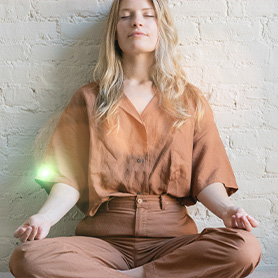
What is Source to you? In this audio teaching and practice from a fourth session of the American Viniyoga Institute’s Viniyoga Foundations Program for Teaching & Yoga Therapy, Gary guides a meditation practice on Sūtra I:23 (Īśvara praṇidhānādvā) and Sūtra I:27 (tasya vācakaḥ praṇavaḥ), in the style of Tantric Manasa Pūjā visualization in the Cave of the Heart.

The River of Life: The Inner Practices of Tantric Yoga — Oṁ Satyam Caitanyam Ānandam Ātma
Video Teaching From Gary Kraftsow
Review your life from your earliest memories up to the present in this video teaching by Gary, noticing how your self-concept has been shaped by your experiences. Taking support from the Vedic revelation that our true nature is sat cit ānanda (truth, consciousness, bliss), this practice will leave you with the experience of the innate joy of pure awareness.
What People Are Saying About Gary Kraftsow…
Vancouver, Canada
Hallandale Beach, Florida
Viniyoga teacher
Viniyoga teacher
Viniyoga teacher-in-training
Viniyoga teacher
Here’s What You’ll Receive

Seven Pre-Recorded 90-Minute Modules
Experience a unique opportunity to learn from the founder and director of the American Viniyoga Institute from the comfort of your own home. Each session includes a streaming video and guides you to discover specific skills and abilities to take your yoga practice to the next level.

Seven Transcripts of Sessions
In addition to the high-quality videos and MP3 audios, you’ll also receive session transcriptions. You can then review, print, and highlight the most important insights and practices you were given.

Exercises and Questions for Each Lesson
Between sessions, you’ll have the option of completing related exercises, practicing new tools, and answering questions to accelerate your learning and integrate each lesson.
An Unprecedented Opportunity to Join the Online Course, Multidimensional Yoga
We feel honored that Gary Kraftsow has chosen to partner with The Shift Network to offer this exclusive online training. This is a unique opportunity to learn from the founder and director of the American Viniyoga Institute whose powerful insights and pioneering work are helping us heal and awaken ourselves and our world.
If you’re serious about taking your yoga practice to the next level, then you owe it to yourself, your loved ones, and our world to take this one-of-a-kind training.
Your Satisfaction Is 100% Guaranteed!

If you don’t absolutely LOVE Multidimensional Yoga — or don’t feel that it meets your needs — please submit your refund request form 14 days from your date of purchase and we’ll happily issue qualifying customers a refund.
More Praise for Gary Kraftsow
Viniyoga student
Aurillac, France
Haiku, Hawaii
About Gary Kraftsow
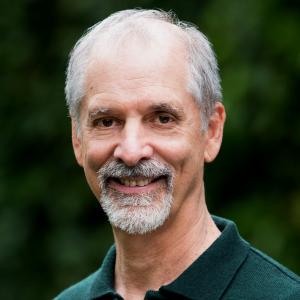
Gary Kraftsow has been an innovator in the transmission of yoga for health, healing, and personal transformation for over 40 years. He began his study of yoga in India with T.K.V. Deśikāchar in 1974 and received a Viniyoga Special Diploma from Viniyoga International in Paris, France in 1988.
Gary received his master’s degree in psychology and religion from the University of California at Santa Barbara in 1983 and opened the Maui School of Yoga Therapy around that time.
In 1999, he founded the American Viniyoga Institute, LLC. Since then, he has become a renowned speaker and teacher of the Viniyoga methodology at many conferences and schools nationally and internationally. Gary developed protocols for two National Institutes of Health studies, one on yoga for chronic low back pain and one on yoga for anxiety. He also helped develop a clinical trial on mind-body stress reduction in the workplace.
He is the director and senior teacher at the American Viniyoga Institute (AVI®), author of the books Yoga for Wellness and Yoga for Transformation, and the educational DVDs Viniyoga Therapy for Low Back, Sacrum and Hips… Viniyoga Therapy for Upper Back, Neck and Shoulders… Viniyoga Therapy for Depression… and Viniyoga Therapy for Anxiety.
He has also produced multiple online workshops and is in the process of creating the AVI Digital Library, which offers both live and on-demand classes.